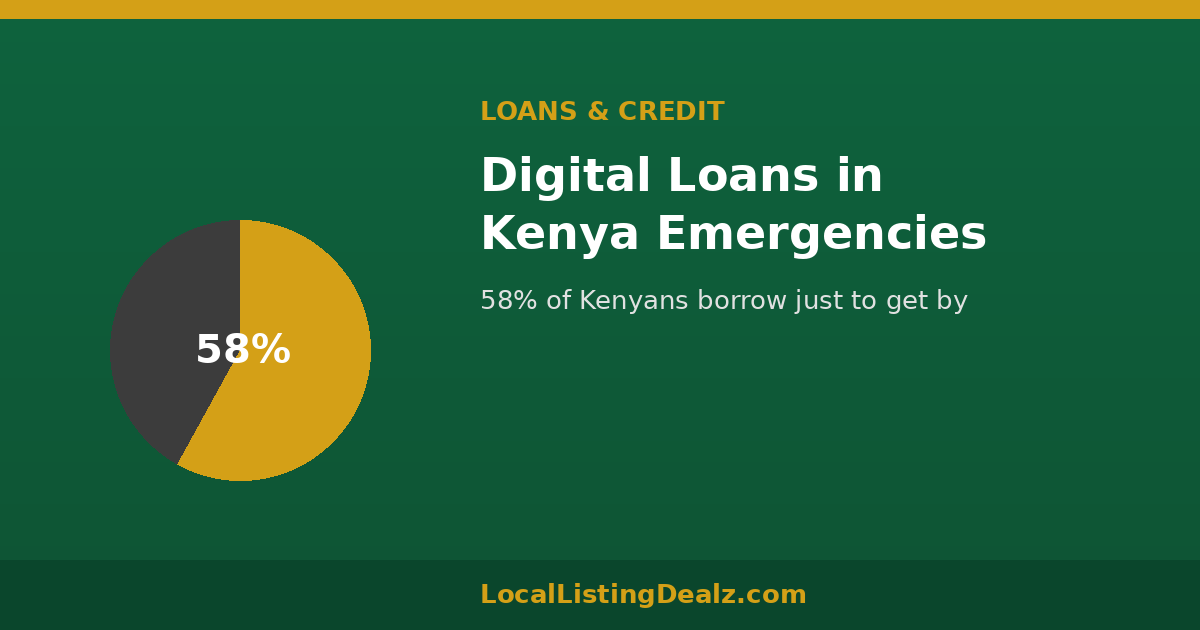
Digital Loans in Kenya Emergencies: Why 58% of Kenyans Are Borrowing to Survive
Digital loans in Kenya emergencies have become the norm rather than the exception, according to a new report that paints a sobering picture of the country’s financial resilience.
If you’ve ever taken a quick mobile loan just to get through a tough week, you’re far from alone — and the data behind this trend reveals something important about how Kenyan households are really coping with rising costs.
Digital Loans in Kenya Emergencies: The Headline Numbers
Tala’s 2026 MoneyMarch Report — now in its sixth year and Kenya’s most comprehensive annual study of borrowing behaviour — found that 58% of Kenyans have relied on digital loans to cover emergency expenses.
Perhaps more concerning is what sits behind that figure: 24% of Kenyans said they would be unable to sustain their current lifestyle for more than one month if their income suddenly stopped.
Together, these numbers point to a population with very little financial cushion, where digital loans in Kenya emergencies have effectively become the default safety net for a quarter of the country.
Why Digital Loans in Kenya Emergencies Are Becoming So Common
The report’s authors point to a shift that goes beyond simple demand for credit.
As Teddy Kahiro, User Research Manager at Tala, put it: “In the past, around 80 per cent of the loans people took were primarily to grow and expand their businesses.” That’s no longer the dominant pattern. Borrowing has increasingly redirected toward covering essentials — food, utilities, school fees, and medical costs — rather than funding growth or opportunity.
One statistic makes this shift especially clear: medical expenses now drive 26% of digital borrowing, up sharply from 17% the year before.
When a rising share of loans exists purely to cover healthcare costs rather than build something, that’s a strong signal of households borrowing to survive rather than to get ahead.
The report also found that 91% of Kenyans have used a digital credit provider, up from 87% the previous year — even as the size and frequency of individual loans has become more cautious. In other words, digital loans in Kenya emergencies aren’t a niche behaviour; they’re close to universal, even as individual borrowers try to use them more sparingly.
The Bigger Picture: Kenya’s Financial Health Gap
Perhaps the most striking figure in the wider MoneyMarch research isn’t about borrowing at all — it’s about financial health. While 84% of Kenyan adults are financially included (meaning they have access to a bank account or mobile money), only 16% are considered financially healthy. That’s an enormous gap between having access to financial tools and actually being in a stable financial position — and it’s precisely the gap that pushes so many Kenyans toward digital loans in Kenya emergencies when something goes wrong.
Separate findings from the same research body found that 89% of consumers say rising costs are directly affecting their household budgets, a 3-percentage-point increase from the year before, and 73% report cutting back on non-essential expenses just to afford basics like food and rent.
Some Genuinely Positive Signs Amid the Pressure
It’s not an entirely bleak picture. The report also found reasons for cautious optimism:
- Business ownership rose by 8 percentage points since 2025, suggesting entrepreneurship is being used as a coping strategy even during difficult times.
- 59% of Kenyans are now saving through banks and chamas, up from 56% the year before — a small but real increase in the habit of building a buffer.
- Recovery from financial shocks is possible, though the timeline varies enormously — from under a month to more than six months, depending on income stability, credit access, and social support systems.
What Digital Loans in Kenya Emergencies Mean for Your Own Finances
If you recognise yourself in these statistics — someone who has turned, or might turn, to a digital loan during a rough month — a few practical takeaways from the report and the wider data:
- Understand the real cost before you borrow. Digital loans in Kenya can carry very high effective annual rates once fees and excise duty are factored in. Our guide to the total cost of a mobile loan in Kenya breaks down exactly what you’ll actually pay across Fuliza, M-Shwari, KCB M-Pesa, and other major providers.
- Only borrow from CBK-licensed lenders. With over 259 licensed Digital Credit Providers now operating in Kenya, it’s worth confirming your lender is on the approved list before you borrow. Our guide on how to check if your digital loan app is CBK licensed walks through exactly how to verify this.
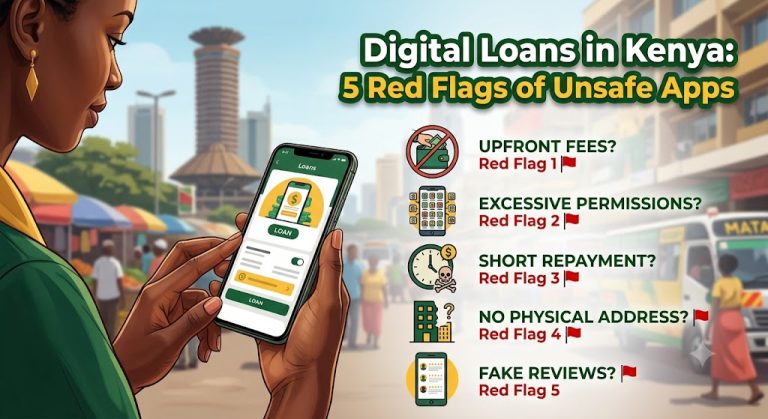
- Watch for red flags of unsafe lending apps. Not every app operating in Kenya’s crowded digital lending space is trustworthy — see our breakdown of 5 red flags of unsafe digital loan apps before you download anything unfamiliar.
- Build even a small buffer if you can. The report’s own recommendation — echoed by Tala senior manager Stephen Ruhohi — is that improving budgeting, debt management, and income planning can meaningfully reduce dependence on emergency borrowing over time.
- If medical costs are driving your borrowing, it may be worth exploring Kenya’s National Health Insurance Fund (NHIF/SHA) coverage options before defaulting to a digital loan, since healthcare-driven debt was specifically flagged as a growing and concerning trend in this year’s report.
Frequently Asked Questions
How many Kenyans rely on digital loans for emergencies? According to Tala’s 2026 MoneyMarch Report, 58% of Kenyans have used digital loans to cover emergency expenses.
What percentage of Kenyans could survive a month without income? Only 76% could sustain their current lifestyle for more than a month if their income stopped — meaning 24% could not, according to the same report.
Why are more digital loans in Kenya emergencies being used for medical expenses? Medical-related borrowing rose from 17% to 26% year-on-year, reflecting rising healthcare costs and gaps in health coverage for many households.
Is it safe to use digital loan apps in Kenya? It can be, provided the app is licensed by the Central Bank of Kenya. With over 259 licensed providers now operating, checking your lender’s license status is an essential first step before borrowing.
What can reduce reliance on digital loans in Kenya emergencies? Tala’s own report points to improved budgeting, debt management, and income planning as the most effective long-term ways to reduce dependence on emergency borrowing.
This article is for educational purposes only and does not constitute financial advice. Figures are drawn from Tala’s 2026 MoneyMarch Report and related coverage; confirm current lending regulations via the Central Bank of Kenya before borrowing.