KPC Shares 2026: Kenya Pipeline Company Price, Dividend & Investment Analysis
KPC Shares 2026: Kenya Pipeline Company Price, Dividend & Investment Analysis
KPC shares began trading on the Nairobi Securities Exchange on March 10, 2026 — here is everything investors need to know about buying, holding, or selling Kenya Pipeline Company stock.
The Kenya Pipeline IPO, which opened on January 19, 2026, represents the first Kenyan IPO in 11 years and the largest public share offering since Safaricom’s listing in 2008. With the government selling a 65% stake valued at approximately 163.6 billion shillings through this Kenya Pipeline IPO, this is your chance to become a part-owner of one of Kenya’s most strategic and profitable state enterprises.
What makes this IPO particularly exciting is its accessibility. At just KSh 9 per share with a minimum purchase of 100 shares, you can invest for as little as KSh 900. The government expects this offering to attract over two million retail investors, dramatically expanding public participation in Kenya’s capital markets.
Whether you’re a first-time investor or an experienced trader looking to diversify your portfolio, this comprehensive Kenya Pipeline IPO guide will walk you through everything you need to know—from understanding the company’s business model to the step-by-step application process, investment analysis, and what to expect after you’ve purchased your shares.
📊 KPC UPDATE — March 2026: IPO Closed, Shares Now Trading
The KPC IPO closed on February 19, 2026 and shares began trading on the NSE on March 10, 2026. Here is what happened:
KPC shares opened at KES 9.30 on listing day — a 3.3% premium to the KES 9 IPO price. State Department for Youth Affairs and Creative Economy By close of trading on March 10, the share price settled at KES 9.18. On March 11 the price edged down to KES 9.10. Uwezo As of March 14, KPC is trading at approximately KES 9.06 — slightly below the IPO price.
IPO results at a glance:
- Shares offered: 11.81 billion at KES 9 each
- Total raised: KES 106.3 billion ($823 million)
- Oversubscription rate: 105.7%
- Total applications received: 12.49 billion shares
- Retail investors received 464.8 million shares — roughly 3.9% of the IPO Nyotaproject
- KPC is now the fifth-largest firm on the NSE by market cap after Safaricom, Equity, KCB, and EABL NSSF Kenya
Did not get allocated? You can still buy KPC on the NSE. Scroll to Section 8 for how to buy KPC shares today through a stockbroker or M-Pesa.
KPC Shares: What Does Kenya Pipeline Company Actually Do?
Kenya Pipeline Company is far more than just a fuel transporter—it’s the backbone of East Africa’s energy infrastructure and a company that has quietly delivered consistent profits while most Kenyans barely noticed.
What KPC Does
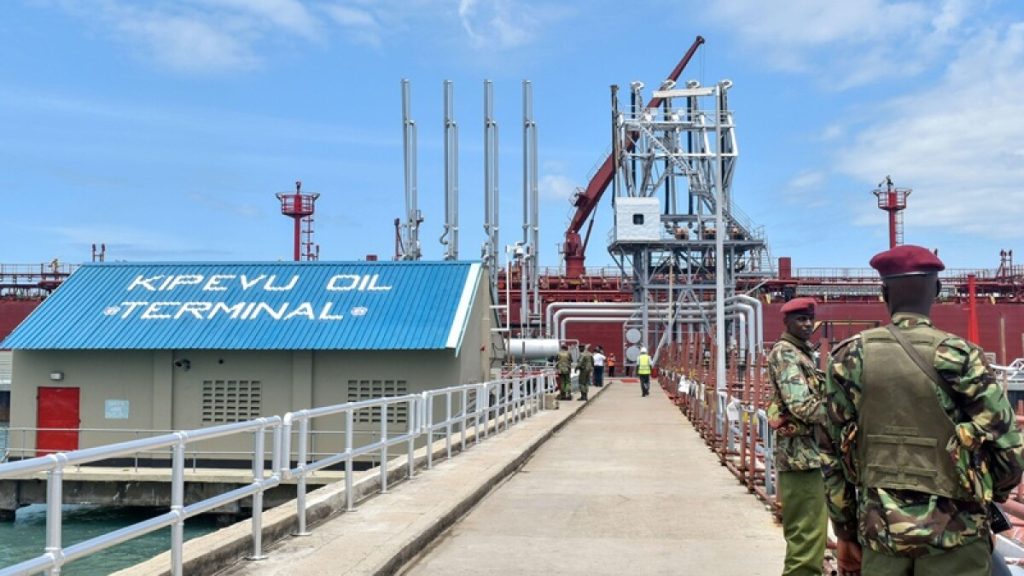
Established in 1973 and operational since 1978, KPC manages petroleum products through its transport system and oil depot network, operating under the Ministry of Energy. The company operates approximately 1,342 kilometers of petroleum pipeline infrastructure stretching from Mombasa through Nairobi to western Kenya towns including Nakuru, Kisumu, and Eldoret.
Think of KPC as the arterial system for Kenya’s fuel supply. Every time you fill up your car, the petrol likely traveled through KPC’s pipelines. The company operates five major storage and distribution depots and two aviation fuel depots at Jomo Kenyatta International Airport and Moi International Airport.
Beyond petroleum transport, KPC has diversified into complementary businesses:
Fiber Optic Cable Network: KPC operates a 96-core fiber optic cable running along its oil pipeline, licensed by the Communications Authority of Kenya in 2018 to provide telecommunications services. This leverages existing infrastructure to create an additional revenue stream in the high-growth digital sector.
Laboratory Services: KPC offers premier oil and gas laboratory testing services at facilities in Nairobi, Mombasa, Nakuru, Eldoret, and Kisumu, accredited to ISO 17025:2017 standards.
Morendat Institute of Oil & Gas: A wholly-owned subsidiary founded in 2014 providing specialized training in oil and gas management, operations, and maintenance.
Kenya Petroleum Refineries Limited (KPRL): KPC recently acquired KPRL, which owns 370 acres of prime industrial land that will be critical for proposed LPG refinery and storage facilities.
Financial Performance: A Profit-Making Machine
Unlike many state corporations that drain government resources, KPC does not depend on government subsidies but is instead a source of revenue to the government through dividends and taxes.
The numbers speak for themselves. For the financial year ended June 30, 2025, KPC reported revenues of Sh 38.6 billion and after-tax profits of Sh 10.37 billion. This represents strong growth from the previous year’s performance of Sh 35.4 billion in revenue.
Let’s break down the key financial metrics from the IPO prospectus:
- Earnings Per Share (Pre-Split): KSh 412.2
- Earnings Per Share (Post-Split): KSh 0.4122
- Dividend Per Share (Post-Split): KSh 0.347
- EBITDA: KSh 18.59 billion
- Dividend Payments to Treasury: Up to KSh 7 billion annually in recent years
The company has demonstrated consistent growth with a five-year compound annual growth rate of approximately 8% and profit before tax averaging 14%. For FY 2023/24, throughput increased 6% to 9.1 million cubic meters, driving revenue growth.
Even more impressive: the company is sitting on approximately KSh 16.2 billion in cash with virtually no debt, positioning it strongly for future expansion.
Why KPC Is Going Public
The government’s decision to privatize KPC through an IPO serves multiple strategic objectives:
- Revenue Mobilization: The approximately KSh 106 billion in gross proceeds will fund the 2025/26 national budget, specifically targeting critical infrastructure in energy, roads, water and irrigation, and airports.
- Market Development: Deepening Kenya’s capital markets by attracting hundreds of thousands of new retail investors and demonstrating the viability of large-scale public offerings.
- Enhanced Governance: Listing on the NSE introduces market discipline, transparency, and improved corporate governance through public ownership and regulatory oversight.
- Operational Efficiency: Private sector participation is expected to enhance innovation and efficiency while the government retains a 35% strategic stake to safeguard national energy security.
- Unlocking Value: Removing bureaucratic constraints that have limited KPC’s growth potential, including lengthy approval processes for capital expenditure and strategic initiatives.
Kenya Pipeline IPO Details: Everything You Need to Know
Share Price and Valuation
The government set the share price at KSh 9.00 using an earnings-based valuation, specifically an EV/EBITDA multiple of 8.1 times. This pricing values the entire company at approximately KSh 163.6 billion.
At KSh 9 per share with post-split earnings of KSh 0.4122, the Price-to-Earnings (P/E) ratio works out to approximately 21.8x—in line with other infrastructure and utility stocks on the NSE.
Track KPC’s live share price on the NSE website at nse.co.ke under ticker symbol KPC, or on mystocks.co.ke for historical charts.
Minimum Investment and Share Allocation
Minimum Purchase: 100 shares costing KSh 900 Maximum Individual Allocation: No upper limit specified, though there will be ownership concentration limits to ensure broad-based ownership
Share Allocation Structure:
- Total Shares Available: 11.8 billion shares (representing 65% of the company)
- Kenyan Retail Investors: Up to 60% of the total offering
- Institutional Investors: Allocated portion
- Regional and Diaspora Investors: Open participation
- Employee Share Ownership Plan (ESOP): Dedicated allocation for KPC staff
The 60% allocation priority for Kenyan retail investors represents approximately 7.08 billion shares, ensuring ordinary citizens get preferential treatment over large institutions.
Critical Dates and Timeline for the Kenya Pipeline IPO
The offer opens on January 19, 2026 and closes on February 19, 2026, providing a one-month application window. Here’s the complete timeline:
- Offer Opening: January 19, 2026 (9:00 AM)
- Offer Closing: February 19, 2026 (5:00 PM)
- Allocation Results Announced: March 4, 2026
- Final Payment Date: March 5, 2026
- Shares Credited to CDS Accounts: March 6, 2026
- Trading Begins on NSE: March 9, 2026
Important Note: These dates are subject to approval and potential changes by the Capital Markets Authority. Check official channels for any updates.
How to Apply for Kenya Pipeline IPO Shares
The Kenya Pipeline IPO is being conducted entirely through electronic platforms, making it one of the most accessible public offerings in Kenyan history. Gone are the days of physical application forms, bank queues, and manual processes. Here’s your step-by-step guide to applying for Kenya Pipeline IPO shares:
Prerequisites: What You Need Before Applying
1. Central Depository System (CDS) Account
This is absolutely essential. You cannot receive shares without a CDS account. If you don’t have one yet, contact a stockbroker or investment bank immediately to open an account before February 19, 2026. The account opening process typically takes 3-5 business days, so don’t wait until the last minute.
2. Required Documents for CDS Account:
- Valid National ID or Passport
- KRA PIN Certificate
- Proof of residence (utility bill or bank statement)
- Passport-size photos
- Bank account details
3. Funding: Calculate the total cost (number of shares × KSh 9) and ensure your M-Pesa wallet or bank account has sufficient funds. Remember to add a small buffer for potential transaction fees.
4. Active Mobile Number: Your mobile number must be registered in your name and active. You’ll receive SMS confirmations and updates throughout the process.
Application Method 1: USSD Code (Easiest for Most People)
This is the quickest and most convenient method, especially if you’re comfortable with mobile money:
Step 1: Dial *483*816# from your registered mobile number
Step 2: Follow the prompts to select “Kenya Pipeline IPO”
Step 3: Enter the number of shares you wish to purchase (minimum 100 shares)
Step 4: Input your CDS account number when prompted
Step 5: Confirm your application details
Step 6: Complete payment via M-Pesa directly from your phone
Step 7: You’ll receive an SMS confirmation of your application
The entire process takes just a few minutes and can be done from anywhere.
Application Method 2: Online Portal
For those who prefer a computer-based interface or want to review more information during the Kenya Pipeline IPO application process:
Step 1: Visit the official IPO website at kpcipo.e-offer.app
Step 2: Register or log in with your details
Step 3: Click “Apply for Shares” and select “New Application”
Step 4: Complete the electronic application form with:
- Your personal details
- CDS account number
- Number of shares you want to purchase
- Payment information
Step 5: Upload proof of payment (if paying via bank transfer or EFT)
Step 6: Review and submit your application
Step 7: Monitor your email and mobile number for application status updates
Application Method 3: Through Stockbrokers and Banks
If you prefer personal assistance or have questions:
Authorized Stockbrokers: Contact any licensed stockbroker (Genghis Capital, Faida Investment Bank, Nabo Capital, Sterling Capital, etc.)
Authorized Banks: Several commercial banks are acting as collection agents
Process: Visit their office or use their online platforms, complete the application with their assistance, and make payment through their designated channels.
Payment Options
- M-Pesa/Mobile Money: Direct payment through USSD or online portal
- Bank Transfer/EFT: Transfer to designated IPO collection accounts
- Banker’s Cheque: Through authorized banks and brokers
Official Contact Information for Support
Share Registrar Support:
- Email: [email protected]
- Phone: +254 709 170 006 / +254 730 121 106
Important: Only use officially published contacts to avoid fraudulent activity. Be wary of unsolicited calls or messages claiming to offer special IPO deals.
Are KPC Shares Worth Buying in 2026?
This is the crucial question every potential investor must answer for themselves. Let’s examine both sides objectively.
The Investment Case: Strengths and Opportunities
1. Essential Infrastructure Monopoly
KPC operates Kenya’s only petroleum pipeline network—a natural monopoly that’s virtually impossible to replicate due to massive capital requirements and strategic importance. This provides significant competitive advantages and pricing power.
2. Stable, Predictable Cash Flows
Unlike discretionary consumer businesses, fuel demand is relatively inelastic and predictable. People and industries need fuel regardless of economic conditions. KPC’s revenues are based on regulated tariffs set by the Energy and Petroleum Regulatory Authority (EPRA), providing visibility and stability.
3. Strong Financial Track Record
The company has demonstrated consistent profitability, healthy margins, and solid balance sheets. With minimal debt and strong cash generation, KPC is well-positioned for both dividends and growth investments.
4. Attractive Dividend Potential
Based on the prospectus figures, the dividend per share of KSh 0.347 on a KSh 9 share price represents a potential dividend yield of approximately 3.9%. This is attractive for income-focused investors, though future dividends aren’t guaranteed.
5. Growth Opportunities
KPC plans to spend 110 billion shillings ($852.6 million) over the next five years, more than three times the 34 billion-shilling outlay between 2021 and 2025. Planned projects include:
- New pipeline from Eldoret to Kampala, Uganda, extending to Rwanda
- Oil trading hub in Mombasa
- Bulk natural gas handling facility for imports from Tanzania
- Additional storage for strategic petroleum reserves
- Commercial power plant and solar farming
- Biofuel refinery conversion producing sustainable aviation fuel
6. Diversification Benefits
The energy logistics and infrastructure sector is structurally different from other dominant sectors on the NSE—banking, manufacturing and telecoms. Adding KPC to your portfolio provides exposure to a different earnings cycle and can reduce overall portfolio volatility.
7. Regional Expansion Potential
KPC’s strategic position to serve Kenya, Uganda, Rwanda, South Sudan, and potentially other East African countries provides growth optionality as regional fuel demand increases.
Risks of Holding KPC Shares
1. Regulatory Risk
KPC’s tariffs are set by EPRA. Any adverse tariff adjustments could impact profitability. The company submitted a multi-year tariff application in June 2025, and the outcome will be crucial for future earnings.
2. Regional Competition
Uganda’s plans for a refinery to be operational by 2030 poses “a significant risk to KPC in terms of its regional expansion strategy”. If Uganda develops its own refining and distribution capacity, KPC could lose a key growth market.
3. Transition to Renewable Energy
Long-term global trends toward electric vehicles and renewable energy could eventually reduce petroleum demand, though this is likely a decade-plus horizon issue for Kenya.
4. Government Influence
Even after privatization, the government retains 35% ownership and considerable influence. While this provides stability, it could also limit certain strategic decisions or create bureaucratic delays.
5. Capital Expenditure Requirements
The ambitious KSh 110 billion expansion plan requires significant capital. While management indicates this will come from “internally generated cash flows and innovative financing structures including debt capital markets and partnerships,” execution risk remains.
6. Oversubscription Risk
If the IPO is heavily oversubscribed, you may receive fewer shares than you applied for. While this indicates strong demand, it could limit your initial position size.
7. Market Volatility
Once trading begins on March 9, 2026, share prices will fluctuate based on market sentiment, NSE overall performance, and company-specific news. Short-term price movements can be unpredictable.
Analyst Opinions
James Kamanja, an analyst, stated: “This IPO is unprecedented in scale for the NSE because the sale of 11.8 billion shares dwarfs previous offers and is expected to significantly deepen the market by attracting hundreds of thousands of new retail investors”.
He noted the promised dividend yield based on recent payouts could provide an attractive income stream, while acknowledging the offering represents a critical test of investor confidence in both the privatization program and local capital markets.
KPC Share Price: What Has Happened Since Listing
KPC has now been trading for six days. Here is the honest price picture:
KPC stock has fallen 2.37% compared to the previous week, ranking 57th on the NSE in terms of year-to-date performance. Ringier AG The share opened at KES 9.30 on day one, touched KES 9.40 in early trade, and has since drifted back toward and slightly below the IPO price.
This is not unusual for a large IPO. The real tradable float may be closer to one-fortieth of what the KES 163.6 billion headline valuation implies. Nyotaproject The majority of shares are held by institutional investors — Uganda’s National Oil Company entered as a sovereign buyer acquiring roughly a fifth of the entire pipeline operator and extracting two board seats in the process. Kenya’s NSSF is understood to be among the largest domestic institutional buyers. None of these are natural sellers. Nyotaproject
What this means for retail investors: the thin tradable float means KPC’s price can move on relatively small volumes. The IPO price of KES 9 acts as a psychological support level. Long-term investors focused on the dividend story have little reason to be concerned about short-term price movement below IPO price — but anyone who bought expecting a quick first-week gain should note the price has already given back the opening premium.
Current price: KES 9.06 (as at March 14, 2026 — check the NSE website at nse.co.ke for live data)
Who Should Consider Investing in the Kenya Pipeline IPO?
Good Fit For:
- Income investors seeking dividend-yielding stocks
- Long-term investors (3-5+ year horizon)
- Those seeking infrastructure exposure
- Investors building diversified portfolios
- Kenyans wanting to participate in national development
May Not Be Suitable For:
- Short-term traders seeking quick profits
- Those who cannot afford to lose their investment
- Investors uncomfortable with regulatory and political risks
- Anyone expecting guaranteed returns
The Bottom Line on the Kenya Pipeline IPO
The Kenya Pipeline IPO offers exposure to essential national infrastructure backed by profitable operations and attractive dividend potential. However, like all equity investments, it carries risks. The key is determining whether this fits your investment goals, risk tolerance, and time horizon.
Consider starting with a modest position you can afford to hold for several years, rather than investing funds you’ll need in the short term.
What Happens After the Kenya Pipeline IPO
Allocation Process
After the Kenya Pipeline IPO offer closes on February 19, 2026, the share registrar will process all applications and determine allocations. If the IPO is fully subscribed or undersubscribed, you’ll likely receive all the shares you applied for. However, if oversubscribed:
Retail Investor Allocation: The 60% reserved for Kenyan retail investors will be allocated proportionally among applicants in this category.
Institutional Allocation: Larger institutional orders may face different allocation methodologies to ensure broad distribution.
Refunds: If you don’t receive all the shares you applied for, any excess funds will be refunded to your bank account or mobile wallet within a few business days.
Allocation results will be announced on March 4, 2026, and you’ll be notified via SMS and email.
Final Payment
If allocated shares, you must complete final payment by March 5, 2026. For most retail investors using M-Pesa or immediate bank transfers, payment is already complete at application. Institutional investors may have different payment arrangements.
Share Crediting
Shares will be credited to CDS accounts on March 6, 2026. You can check your CDS account through your broker’s platform to confirm receipt.
Trading Begins
Trading on the NSE will commence on March 9, 2026. From this date, you can:
Hold Your Shares: Keep them as a long-term investment, receiving dividends when declared (typically quarterly or annually)
Sell Your Shares: Trade them on the NSE through your stockbroker. The market price may be higher or lower than the KSh 9 IPO price depending on demand.
Monitor Performance: Track KPC’s stock price through the NSE website, your broker’s platform, or financial news sources.
What to Expect on Listing Day
Historically, IPOs can experience significant price volatility on the first day of trading. Some scenarios:
Price Increases: If demand exceeds supply, the share price could rise above KSh 9, giving early profits to IPO investors.
Price Stability: The stock might trade close to the IPO price as the market finds equilibrium.
Price Decline: If sentiment turns negative or if there’s selling pressure, the price could fall below KSh 9.
Resist the urge to make emotional decisions based on first-day price movements. Remember your investment thesis and time horizon.
Dividend Expectations
Based on historical performance, KPC has paid dividends to the government regularly. As a public shareholder, you’ll be entitled to your proportional share of any dividends declared. However, the company and board will determine dividend policy going forward.
With a dividend per share of KSh 0.347 indicated in the prospectus, you could potentially receive about KSh 35 annually for every 100 shares you own (before taxes), though this is not guaranteed.
Frequently Asked Questions About the Kenya Pipeline IPO
How much money do I need to invest?
The minimum investment is 100 shares at KSh 9 each, totaling KSh 900. However, you should budget slightly more to cover any transaction fees. There’s no maximum limit for individual retail investors, subject to ownership concentration limits.
When will I start receiving dividends?
Dividend timing and amounts will be determined by KPC’s board of directors after listing. Based on the company’s history, dividends are typically declared annually after financial year-end results. Your first dividend could potentially come in late 2026 or early 2027, covering the 2025/26 financial year.
Can I sell my shares immediately after listing?
Yes, once trading begins on March 9, 2026, you can sell your shares at any time through your stockbroker. However, you’ll need to pay brokerage fees (typically 1.3-2% of transaction value), and the market price may be different from the KSh 9 IPO price.
What if the Kenya Pipeline IPO is oversubscribed?
If the Kenya Pipeline IPO is oversubscribed, shares will be allocated proportionally among applicants in each category. You’ll receive a percentage of what you applied for, and the remainder of your payment will be refunded to your bank account or mobile wallet within a few days.
Is my investment guaranteed to make money?
No investment in stocks is guaranteed. While KPC has strong fundamentals and profitability, share prices can go down as well as up. You could lose some or all of your investment. Only invest money you can afford to hold for the long term and potentially lose.
What are the tax implications?
Dividends: Subject to 5% withholding tax, deducted automatically before payment Capital Gains: Currently no capital gains tax on stock profits in Kenya Record Keeping: Maintain records of your purchase price, dividends received, and any sales for tax compliance purposes
Can Kenyans living abroad invest in the IPO?
Yes, diaspora Kenyans can participate. You’ll need to open a CDS account and may need to coordinate with brokers who handle international clients. Consider any tax implications in your country of residence.
How do I check if my application was successful?
You’ll receive SMS and email notifications at each stage. Additionally, you can contact the share registrar at +254 709 170 006 or +254 730 121 106, or check through your broker’s platform.
What happens to my shares if KPC performs poorly?
As a shareholder, you own part of the company and share in its performance—both good and bad. Poor performance could lead to dividend cuts and falling share prices. However, as a strategic infrastructure company with regulated revenue, KPC has some downside protection compared to more volatile businesses.
Can I buy more Kenya Pipeline shares after the IPO closes?
Yes, once trading begins on March 9, 2026, you can purchase additional Kenya Pipeline shares on the secondary market through your stockbroker at prevailing market prices.
Conclusion
The Kenya Pipeline IPO represents a landmark opportunity for Kenyans to invest in a profitable, strategic national asset that has quietly delivered consistent performance for decades. At KSh 9 per share with a minimum investment of just KSh 900, the barrier to entry is remarkably low.
However, approach this investment with your eyes wide open. While KPC’s strong fundamentals, essential infrastructure monopoly, and dividend potential are compelling, all equity investments carry risks. The company faces regulatory uncertainties, regional competition, and the long-term challenge of energy transition.
The offer is open until February 19, 2026—a limited window to participate in what could be Kenya’s most significant capital markets event in over a decade. Whether you choose to invest should depend on your financial situation, investment goals, and risk tolerance.
If you decide to proceed, don’t delay. Open your CDS account if you haven’t already, decide on your investment amount, and complete your application well before the deadline. Technology has made this IPO accessible to millions, but opportunity doesn’t wait.
The choice is yours. Will you be a spectator or a shareholder in Kenya’s energy future?
Disclaimer: This article is for informational purposes only and should not be considered financial advice. Consult with a licensed financial advisor before making investment decisions. All investments carry risk, and you could lose some or all of your investment capital.
Read Also: How to Invest in NSE Kenya 2026: Complete Beginner’s Guide (Step-by-Step