Food Delivery Business Kenya 2026: Complete Guide to Start & Earn with Uber Eats, Glovo, Bolt Food
Food Delivery Business Kenya 2026: Complete Guide to Start & Earn with Uber Eats, Glovo, Bolt Food
Introduction: Food Delivery Business Kenya Growth in 2026
Starting a food delivery business Kenya has never been more profitable or accessible. Kenya’s food delivery industry is experiencing unprecedented growth in 2026, with the market projected to exceed US $562.33 million this year. Whether you want to become a delivery rider for platforms like Uber Eats, Glovo, and Bolt Food, or launch your own independent food delivery business Kenya venture, the opportunities are massive.
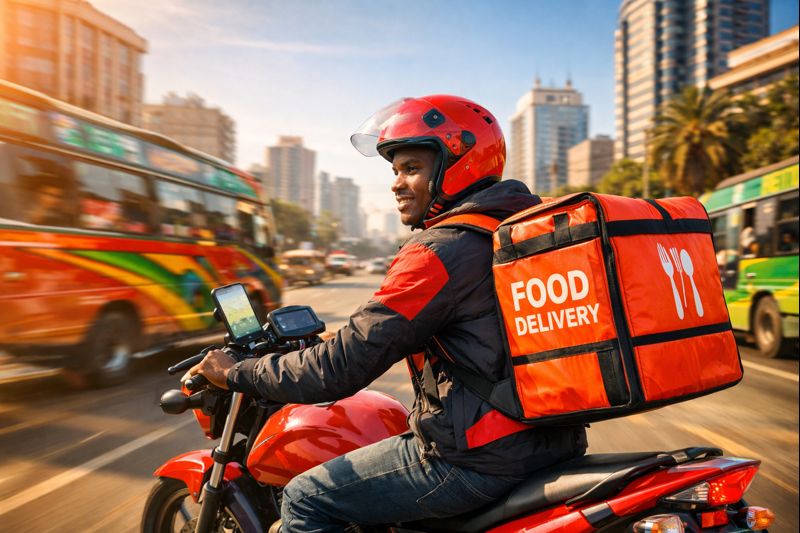
The food delivery business Kenya market has transformed how Kenyans order and receive their meals. From Nairobi’s bustling CBD to the coastal streets of Mombasa, delivery riders on motorcycles have become as common as matatus on our roads. The rise of e-commerce, changing urban lifestyles, and increased smartphone penetration have created perfect conditions for the food delivery business Kenya sector to thrive. Young professionals no longer have time to cook after long commutes, students want convenience, and families are discovering the joy of having restaurant-quality meals delivered to their doorsteps.
Whether you’re a recent graduate looking for flexible income, a boda boda rider wanting to maximize earnings, or an entrepreneur eyeing the booming delivery market, this comprehensive guide will show you exactly how to succeed in the food delivery business Kenya offers in 2026. You’ll learn how to start a food delivery business Kenya residents trust, from joining established platforms to building your own delivery empire.
Option 1: Start a Food Delivery Business Kenya – Become a Delivery Rider
Uber Eats Kenya: Requirements and Earnings
Uber Eats has established itself as one of the leading food delivery platforms in Kenya, operating primarily in Nairobi and Mombasa. Here’s what you need to know:
Requirements to Join Uber Eats:
- Must be at least 18 years old (19+ if using a car)
- Valid Kenyan ID or passport
- Smartphone with data connection
- Valid driver’s license (for motorcycle/car)
- Motorcycle/bicycle/car in good condition
- Third-party or comprehensive insurance (for motorized vehicles)
- Police clearance certificate
- Insulated delivery bag (provided after registration)
Registration Process:
- Download the Uber Driver app from Google Play Store or App Store
- Click “Sign Up” and fill in your personal details
- Upload required documents (ID, license, insurance, vehicle photos)
- Complete background check and vehicle inspection
- Wait for approval (typically 3-7 days)
- Purchase the insulated delivery bag (link provided)
- Complete online training module
- Start accepting deliveries
Realistic Earnings:
- Per delivery: KES 60-200 depending on distance
- Daily earnings: KES 1,000-2,500 (active riders, 6-8 hours)
- Monthly potential: KES 30,000-60,000 after expenses
- Commission: Uber takes 25% of the total fare
Payment System:
- Weekly automatic deposits to your bank account
- Cash collected from customers (if applicable) is deducted from next payment
- Service fee payment via M-Pesa or bank transfer
Pros:
- Flexible working hours
- Weekly payouts
- Surge pricing during peak times
- Established brand with high order volume
- 24/7 support through the app
Cons:
- 25% commission is relatively high
- High competition in popular areas
- Vehicle maintenance costs are your responsibility
- No guaranteed minimum earnings
- Strict rating system affects future orders
Glovo Kenya: Requirements and Earnings
Glovo operates across multiple Kenyan cities including Nairobi, Mombasa, Kisumu, Nakuru, Eldoret, Thika, Ruiru, and Kikuyu, making it one of the most widespread platforms.
Requirements to Join Glovo:
- Must be at least 18 years old
- Valid Kenyan ID card
- Smartphone with internet connection
- Vehicle (motorcycle, bicycle, or car)
- Valid driver’s license (for motorized vehicles)
- Motor vehicle insurance (where applicable)
- KES 400 one-time platform activation fee
Registration Process:
- Visit couriers.glovoapp.com or download the Glovo Courier app
- Fill in the registration form with personal information
- Watch the mandatory online info session
- Submit required documents for verification
- Receive approval notification
- Attend onboarding session (online or in-person)
- Receive your isothermal backpack
- Start delivering
Realistic Earnings:
- Monthly average: KES 25,000-40,000 (some riders report up to KES 50,000)
- Daily potential: KES 1,000-3,000 depending on hours worked
- Earning components:
- Base rate per order (varies by city)
- Distance-based payment
- Waiting time compensation (after 5 minutes)
- Weather bonuses (rain)
- Night shift bonuses
- Quest challenges and promotions
- Customer tips (100% goes to rider)
Payment System:
- Bi-weekly payments (Monday to Sunday cycles)
- Direct bank transfer 2-3 business days after billing period
- Real-time earnings tracking in the app
Pros:
- Multiple earning components beyond base fare
- Weather and time bonuses increase income
- Operates in more cities than competitors
- Insurance coverage while connected to platform
- Guaranteed earnings compensation for slow periods
- Customer tips go 100% to riders
Cons:
- KES 400 activation fee required upfront
- Bi-weekly payments (longer wait than Uber’s weekly)
- Earnings vary significantly by location
- Must maintain good performance scores
- Distance calculated by Google Maps shortest route
Bolt Food Kenya: Requirements and Earnings
Bolt Food is rapidly expanding in Kenya, currently operating primarily in Nairobi with plans for wider coverage.
Requirements to Join Bolt Food:
- Must be at least 18 years old
- Valid photo ID
- Smartphone with local phone number
- Vehicle (motorcycle, bicycle, car, or electric scooter)
- Valid driver’s license (for motorized vehicles)
- Ability to speak English or Kiswahili
Registration Process:
- Visit the Bolt Food website or bolt.eu/en-ke/food/courier
- Click “Earn extra money as a courier”
- Complete the registration form
- Select Nairobi as your city
- Submit required documents
- Wait for account verification (credentials sent via SMS)
- Receive Bolt Food branded bag
- Complete app training
- Start accepting orders
Realistic Earnings:
- Daily potential: KES 1,500-3,500
- Monthly estimate: KES 35,000-105,000 (varies widely by activity level)
- Earning factors:
- Order pick-up charges
- Order drop-off fees
- Distance traveled
- Peak hour bonuses
- Weekend premiums
- Bad weather bonuses
- Customer tips via app
- Campaign bonuses
Payment System:
- Weekly payout cycle (Monday 00:00 to Sunday 23:59)
- No monthly fees
- Dynamic pricing model (earn more during busy times)
- Track earnings in real-time through app
Pros:
- Weekly payments
- No monthly fees
- Dynamic pricing increases earnings during busy periods
- Flexible schedule with no minimum hours
- Customer tips directly through app
- Special campaigns and bonuses
- Growing platform with less saturation
Cons:
- Currently limited mainly to Nairobi
- Newer platform means fewer established restaurant partnerships
- Earnings highly dependent on being online during peak hours
- Must maintain vehicle and fuel at own cost
Platform Comparison Table
| Feature | Uber Eats | Glovo | Bolt Food |
|---|---|---|---|
| Commission/Fee | 25% of fare | KES 400 activation | None (keeps full fare) |
| Payment Frequency | Weekly | Bi-weekly | Weekly |
| Operating Cities | Nairobi, Mombasa | 8+ cities nationwide | Mainly Nairobi |
| Average Monthly Earnings | KES 30,000-60,000 | KES 25,000-50,000 | KES 35,000-105,000 |
| Daily Potential | KES 1,000-2,500 | KES 1,000-3,000 | KES 1,500-3,500 |
| Weather Bonuses | No | Yes | Yes |
| Waiting Time Pay | No | Yes (after 5 min) | Variable |
| Customer Tips | Yes | Yes (100%) | Yes |
| Insurance Coverage | No | Yes | Variable |
| App Rating | 4.3/5 | 4.2/5 | 4.1/5 |
Required Documents and Equipment
Essential Documents:
- National ID or passport
- KRA PIN certificate
- Valid driver’s license (Category A for motorcycle, B for car)
- Police clearance certificate
- Motorcycle/vehicle registration (logbook)
- Insurance certificate (comprehensive or third-party)
- Good Conduct Certificate from CID (for some platforms)
Essential Equipment:
- Smartphone (minimum Android 7.0 or iOS 12)
- Budget options: Samsung Galaxy A series (KES 15,000-25,000)
- Recommended: Infinix or Tecno with 4G (KES 12,000-20,000)
- Data bundle (at least 2GB monthly)
- Power bank (minimum 10,000mAh)
- Phone holder for motorcycle
- Reflective jacket/vest
- Helmet (mandatory for motorcycle riders)
- Insulated delivery bag (provided by platform or KES 2,000-4,000)
Initial Investment Breakdown:
- Motorcycle (if purchasing): KES 80,000-150,000 (second-hand)
- Smartphone: KES 12,000-25,000
- Insurance (annual): KES 15,000-25,000
- Licenses and permits: KES 5,000-10,000
- Power bank and accessories: KES 3,000-5,000
- Safety gear: KES 3,000-5,000
- Total if buying motorcycle: KES 118,000-220,000
- Total if you own motorcycle: KES 38,000-70,000
Option 2: Launch Your Own Food Delivery Business Kenya
Initial Investment Needed
Starting your own delivery service requires more capital but offers greater control and profit margins. The food delivery business Kenya market rewards entrepreneurs who can provide reliable, personalized service:
Minimum Startup Capital: KES 100,000-500,000
Detailed Budget Breakdown:
- Vehicles (KES 80,000-300,000)
- 1-2 second-hand motorcycles: KES 80,000-150,000 each
- Or start with one motorcycle and scale up
- Bicycle option for lower budget: KES 15,000-30,000
- Legal Requirements (KES 10,000-20,000)
- Business registration: KES 10,000
- County trade license: KES 5,000-10,000
- Food handling permits: KES 3,000-5,000
- Technology (KES 0-50,000)
- Basic: WhatsApp Business (free)
- Mid-range: Website with order form (KES 20,000-30,000)
- Advanced: Custom app development (KES 200,000+)
- Affordable solution: Glovo for Business or similar third-party platforms
- Marketing (KES 10,000-30,000)
- Branding and logo design: KES 5,000-10,000
- Business cards and flyers: KES 3,000-5,000
- Social media advertising: KES 5,000-15,000/month
- Vehicle branding: KES 5,000-10,000
- Equipment (KES 10,000-20,000)
- Insulated delivery bags: KES 2,000-4,000 each
- Smartphones for riders: KES 12,000-15,000 each
- Uniforms/branded t-shirts: KES 2,000-5,000
- Working Capital (KES 20,000-50,000)
- Fuel for first month
- Emergency repairs
- Marketing campaigns
Target Market Strategy for Food Delivery Business Kenya
Understanding your target market is crucial for any food delivery business Kenya venture:
1. Restaurants and Cafes
- Approach small to medium restaurants without their own delivery
- Offer commission-based model (15-20% per order)
- Provide faster delivery than platform aggregators
- Build exclusive partnerships in specific neighborhoods
2. Individual Customers
- Focus on residential estates (Lavington, Kilimani, Ruaka, Utawala)
- Target office buildings during lunch hours
- Market to students in university areas (Kikuyu, Ruaraka)
- Build WhatsApp customer groups for easy ordering
3. Corporate Clients
- Office catering and lunch deliveries
- Regular contracts with companies
- Bulk order discounts
- Invoice payment terms (end of month)
Pricing Strategy for Your Food Delivery Business Kenya
When setting prices for your food delivery business Kenya venture, balance competitiveness with profitability:
Service Fee Structure:
- Delivery within 5km: KES 150-200
- Delivery 5-10km: KES 250-350
- Delivery over 10km: KES 400-600
- Express delivery (30 minutes): Add KES 100-150
- Night deliveries (8pm-6am): Add 30-50%
Alternative Models:
- Flat rate model: KES 200 per delivery within certain zones
- Subscription model: KES 2,000/month for unlimited deliveries (min. order value applies)
- Commission model: 15-20% of order value (for restaurant partnerships)
Competitive Advantages:
- Lower commission rates than big platforms
- Personalized service
- Knowledge of local areas and shortcuts
- Faster response to customer issues
- Ability to negotiate custom deals
Marketing Your Food Delivery Business Kenya
Marketing is crucial for any food delivery business Kenya entrepreneur. Here’s how to attract customers:
Digital Marketing:
- Create Instagram and Facebook business pages
- Post daily updates, promotions, and customer testimonials
- Join local community WhatsApp groups (with admin permission)
- Run targeted Facebook ads (KES 500-1,000 daily budget)
- Google My Business listing
- Partner with food bloggers and influencers
Traditional Marketing:
- Distribute flyers in residential estates
- Partner with estate management for bulletin board space
- Offer first-order discounts (KES 50-100 off)
- Referral program (refer a friend, both get discounts)
- Branded merchandise and vehicle wraps
Partnership Marketing:
- Approach restaurants directly with business proposals
- Offer trial period with reduced commission
- Create exclusive deals with local eateries
- Partner with offices for corporate lunch programs
- Collaborate with grocery stores and supermarkets
Technology Needed
Budget Option (WhatsApp-Based):
- WhatsApp Business account (free)
- Google Forms for order collection (free)
- Google Sheets for order tracking (free)
- Google Maps for routing (free)
- M-Pesa for payments
- Pros: Zero cost, easy to use, most Kenyans familiar
- Cons: Manual processes, difficult to scale, no automation
Mid-Range Option (No-Code Platforms):
- Wix or WordPress website with order forms (KES 15,000-30,000/year)
- Social media integration
- Payment gateway integration (Pesapal, Flutterwave)
- SMS notifications
- Pros: Professional appearance, moderate cost, manageable
- Cons: Still requires some manual coordination
Advanced Option (Custom App):
- iOS and Android app (KES 500,000-2,000,000)
- Admin dashboard
- Real-time GPS tracking
- Automated dispatch
- In-app payments
- Customer ratings
- Pros: Fully automated, scalable, professional
- Cons: High initial cost, requires technical maintenance
Recommended Starting Point: Begin with WhatsApp Business, then transition to a website once you have 20+ regular customers, and only consider an app when processing 100+ orders daily.
Option 3: Partner with Restaurants – Food Delivery Business Kenya Model
Understanding the Ghost Kitchen Concept
A ghost kitchen (or dark kitchen, cloud kitchen) is a restaurant that exists only for delivery—no dine-in customers, no storefront. This model has exploded in Kenya as it dramatically reduces overhead costs.
Your Role as a Delivery Partner:
- Become the exclusive delivery provider for a ghost kitchen
- Higher profit margins (negotiate 25-35% of order value)
- Consistent daily orders from a single source
- Less competition than platform aggregators
How to Partner with Ghost Kitchens
Finding Opportunities:
- Approach existing restaurants struggling with delivery
- Network with chefs wanting to start delivery-only brands
- Partner with food entrepreneurs testing new concepts
- Join restaurant industry Facebook groups and forums
Partnership Structure:
- Option A: Percentage commission (25-35% of each order)
- Option B: Fixed monthly retainer (KES 30,000-80,000) plus small per-order fee
- Option C: Revenue sharing model (you handle marketing, they cook)
Benefits of Ghost Kitchen Partnerships:
- Guaranteed order volume
- Reduced customer acquisition costs
- Streamlined operations (one pickup location)
- Potential for equity stake in growing brands
- Less vehicle wear and tear (centralized location)
Becoming a Dark Kitchen Operator Yourself
If you have culinary skills or capital, consider:
Startup Requirements:
- Small kitchen space: KES 20,000-50,000/month rent
- Commercial cooking equipment: KES 100,000-300,000
- Food licenses and permits: KES 15,000-30,000
- Initial inventory: KES 30,000-50,000
- Your own delivery fleet
Why It Works:
- No expensive restaurant location needed
- No waiters or front-of-house staff
- Lower overhead = higher profit margins (30-40%)
- Can operate multiple food brands from one kitchen
- Focus entirely on food quality and delivery speed
Success Tips for Food Delivery Business Kenya Entrepreneurs
Best Operating Areas
Nairobi:
- Top Zones: Westlands, Kilimani, Lavington, Karen, Runda, Parklands
- High Volume: CBD (weekday lunches), Eastleigh (evenings), Kasarani (weekends)
- University Areas: USIU, KU, Daystar (consistent orders)
- Growing Markets: Ruaka, Utawala, Syokimau, Rongai
Mombasa:
- Nyali, Bamburi, Diani Beach
- Mombasa Island (CBD)
- Tudor, Likoni
Kisumu:
- Milimani, Riat, Tom Mboya Estate
- Lakeside areas, Kisumu CBD
Peak Hours and Seasons
Daily Peak Hours:
- Breakfast: 7:00am-9:00am (limited but growing)
- Lunch: 12:00pm-2:30pm (highest volume)
- Dinner: 6:00pm-9:00pm (second highest)
- Late night: 9:00pm-11:00pm (decent orders, less competition)
Weekly Patterns:
- Monday-Friday: Focus on CBD and offices during lunch
- Friday-Saturday: Highest earnings (parties, family gatherings)
- Sunday: Good for family orders and lunch
Peak Seasons:
- December (holidays): 2-3x normal volume
- April (schools close): Increased family orders
- August (school holidays): Another spike
- Public holidays and long weekends
- Major sports events (World Cup, etc.)
Customer Service Excellence
Communication:
- Call customers if you can’t find the location
- Send courtesy message when picking up order
- Update customer if there’s a delay
- Be polite and professional always
Food Handling:
- Keep hot food hot, cold food cold
- Don’t open customer packages
- Use properly insulated bags
- Secure items to prevent spillage
Delivery Standards:
- Arrive within promised timeframe
- Dress cleanly and professionally
- Wear your delivery brand (branded t-shirt/vest)
- Carry hand sanitizer and tissue
- Have correct change for cash orders
Going Extra Mile:
- Include napkins and utensils when appropriate
- Remember regular customers’ preferences
- Send thank you messages
- Recommend popular items when asked
Common Challenges in Food Delivery Business Kenya and Solutions
Traffic in Nairobi
The Problem: Nairobi traffic can turn a 15-minute delivery into an hour-long ordeal, affecting earnings and customer satisfaction.
Solutions:
- Learn shortcuts and alternative routes through estates
- Use Google Maps but trust local knowledge
- During peak traffic (7-9am, 4-7pm), accept orders in localized zones
- Consider using motorcycles instead of cars (navigate faster)
- Track traffic patterns and avoid certain routes at specific times
- During matatu strikes or political rallies, focus on estate-to-estate deliveries
Safety Concerns
The Risks:
- Road accidents
- Theft of vehicle or phone
- Confrontations with customers
- Unsafe delivery locations
Solutions:
- Always wear helmet and reflective gear
- Invest in comprehensive insurance
- Install bike tracking device (KES 5,000-10,000)
- Verify customer details before starting delivery
- Avoid delivering to completely isolated areas alone
- Join rider associations for support and security tips
- Don’t carry large amounts of cash
- Trust your instincts—decline suspicious orders
- Share live location with a friend/family member when working
Payment Collection
The Problem: Customers not ready to pay, requesting credit, or disputing orders.
Solutions:
- Confirm payment method before leaving restaurant
- For M-Pesa orders, wait for confirmation SMS
- For cash orders, confirm amount with customer over phone
- Set clear policies: no delivery without payment
- Use platform apps that handle payments (reduces risk)
- For regular corporate clients, establish invoice terms clearly
- Take photo evidence of delivered orders
- Join rider groups to share information about problematic customers
Competition in Food Delivery Business Kenya
The Problem: Multiple riders competing for same orders, platforms reducing commissions, new competitors entering the food delivery business Kenya market.
Solutions:
- Specialize in a niche (organic foods, late-night delivery, corporate catering)
- Build direct relationships with customers for repeat business
- Offer superior service that platform competitors can’t match
- Create subscription packages for regular customers
- Partner with restaurants on exclusive basis
- Expand to adjacent services (grocery delivery, pharmacy runs)
- Maintain excellent ratings to get priority orders
- Work during less competitive hours (early morning, late night)
Food Delivery Business Kenya Earnings Breakdown (Real Calculations)
Scenario 1: Part-Time Uber Eats Rider (4 hours/day)
Working Hours: 12pm-2pm and 6pm-8pm daily
Daily Breakdown:
- Deliveries completed: 6-8 orders
- Average per delivery: KES 120
- Gross earnings: 7 orders × KES 120 = KES 840
- Uber commission (25%): -KES 210
- Net earnings: KES 630/day
Monthly Calculation:
- Working days: 26 days
- Gross monthly: KES 21,840
- Expenses:
- Fuel: KES 6,000
- Phone data: KES 1,000
- Bike maintenance: KES 2,000
- Insurance (monthly): KES 1,500
- Net monthly profit: KES 11,340
Scenario 2: Full-Time Glovo Rider (8 hours/day)
Working Hours: 11am-3pm and 5pm-9pm (avoiding dead hours)
Daily Breakdown:
- Deliveries completed: 12-15 orders
- Average per delivery: KES 150 (base + distance + bonuses)
- Gross earnings: 13 orders × KES 150 = KES 1,950
- Customer tips: KES 200
- Total daily: KES 2,150
Monthly Calculation:
- Working days: 26 days
- Gross monthly: KES 55,900
- Expenses:
- Fuel: KES 12,000
- Phone data: KES 2,000
- Bike maintenance: KES 3,500
- Insurance: KES 2,000
- Platform fee: KES 0 (after activation)
- Net monthly profit: KES 36,400
Scenario 3: Own Delivery Business (3 riders)
Business Structure:
- 3 motorcycles
- Operating 6 days/week
- Targeting restaurants and individuals
Monthly Revenue:
- Total deliveries: 60 orders/day × 26 days = 1,560 orders
- Average charge: KES 200/delivery
- Gross revenue: 1,560 × KES 200 = KES 312,000
Monthly Expenses:
- Rider salaries (3 @ KES 25,000): KES 75,000
- Fuel (3 bikes): KES 30,000
- Insurance (3 bikes): KES 6,000
- Bike maintenance: KES 8,000
- Marketing: KES 5,000
- Phone/data (3 lines): KES 3,000
- Licensing/permits: KES 2,000
- Total expenses: KES 129,000
Net monthly profit: KES 183,000 ROI Timeline: Break even in 3-4 months (assuming KES 400,000 startup capital)
Scenario 4: Ghost Kitchen Partnership Model
Partnership Terms:
- 30% commission on all orders
- Kitchen processing 40 orders daily
- Average order value: KES 800
Monthly Calculation:
- Total orders: 40 × 26 days = 1,040 orders
- Total order value: 1,040 × KES 800 = KES 832,000
- Your commission (30%): KES 249,600
- Delivery costs:
- Fuel: KES 15,000
- Rider wages (2 riders): KES 50,000
- Insurance and maintenance: KES 8,000
- Net monthly profit: KES 176,600
How to Grow Your Food Delivery Business Kenya
Scaling Your Food Delivery Business Kenya Operations
Building a sustainable food delivery business Kenya requires strategic scaling:
Months 1-3: Establish Foundation
- Start with one motorcycle and yourself
- Build customer base of 20-30 regular clients
- Perfect your delivery process
- Gather testimonials and reviews
Months 4-6: Add First Employee
- Hire first rider (KES 25,000-30,000/month)
- Purchase or rent second motorcycle
- Expand to new neighborhoods
- Implement basic order management system
Months 7-12: Multiple Riders
- Grow to 3-5 riders
- Create shift schedules (day/night coverage)
- Invest in better technology
- Negotiate bulk fuel discounts
- Consider small office space
Year 2: Business Expansion
- Add non-food deliveries (groceries, pharmacy, parcels)
- Launch in second city or expand zones
- Develop mobile app
- Hire dedicated marketing person
- Create corporate accounts program
Diversification Opportunities in Food Delivery Business Kenya
Expand your food delivery business Kenya beyond just food:
Additional Revenue Streams:
- Grocery delivery: Partner with supermarkets
- Pharmacy runs: Medicine delivery (proper licensing required)
- Document delivery: For businesses and law firms
- Shopping services: Personal shopping + delivery
- Moving services: Small furniture and appliances
- Airport runs: Luggage and package pickup/delivery
Value-Added Services:
- Scheduled deliveries: Pre-order for specific time
- Bulk catering: Large event deliveries
- Gift wrapping: For birthday/celebration deliveries
- Temperature tracking: For sensitive items
- Photo confirmation: Proof of delivery service
Technology Adoption
Immediate (0-3 months):
- WhatsApp Business with automated responses
- Google Sheets for order tracking
- Google Forms for customer feedback
- Free GPS tracking apps
Short-term (3-6 months):
- Basic website with contact form
- Social media scheduling tools
- M-Pesa business till number
- Digital receipt generation
Long-term (6-12 months):
- Custom web platform or app
- Automated dispatch system
- Customer loyalty program
- Analytics dashboard
- Integration with restaurant POS systems
Food Delivery Business Kenya: Frequently Asked Questions
Q: Can I start a food delivery business Kenya without a motorcycle? A: Yes! You can start a food delivery business Kenya with a bicycle in areas with shorter distances. Some riders use public transport for pickup and delivery in CBD areas. However, a motorcycle significantly increases your earning potential in the food delivery business Kenya market.
Q: Which platform pays the best in Kenya? A: Bolt Food tends to have higher earnings potential (KES 35,000-105,000), but this varies by area and effort. Glovo has more consistent work across more cities. Choose based on your location and schedule flexibility.
Q: How much can I realistically make per month? A: Part-time (4 hours/day): KES 15,000-30,000. Full-time (8 hours/day): KES 30,000-60,000 with platforms, or KES 40,000-80,000 with your own business after expenses.
Q: Do I need to register a business to start? A: For working with platforms like Uber Eats or Glovo, no business registration is needed—just your personal documents. For starting your own delivery service, business registration is recommended and costs about KES 10,000.
Q: What happens if food gets damaged during delivery? A: Platform riders: Report immediately through the app; platform usually covers verified incidents. Own business: Have clear policies; consider small insurance or build a buffer fund for replacements.
Q: Can I work for multiple platforms simultaneously? A: Yes! Many riders juggle 2-3 platforms simultaneously using multi-app approaches. This maximizes orders during slow periods and increases overall earnings.
Q: Is it safe to deliver at night in Nairobi? A: Night deliveries (6pm-10pm) are generally safe in well-lit, populated areas like Westlands, Kilimani, and Karen. Avoid isolated routes and always inform someone of your location. Night orders often pay bonuses.
Q: How do I handle difficult customers? A: Stay professional and calm. For platform work, use the app’s reporting system. For your own business, have clear policies on refunds and complaints. The customer isn’t always right, but polite de-escalation usually works.
Q: What insurance do I need? A: Comprehensive or third-party motor insurance is mandatory (KES 15,000-25,000/year). Consider personal accident insurance too. Some platforms like Glovo offer coverage while you’re connected to their app.
Q: How do I compete with established platforms? A: Focus on personalized service, faster delivery times, lower commissions for restaurants, and building direct customer relationships. Specialize in areas or niches that big platforms underserve.
Conclusion: Start Your Food Delivery Business Kenya Today
The food delivery business Kenya presents incredible opportunities in 2026, whether you choose to ride for established platforms, start your own service, or partner with ghost kitchens. Success in the food delivery business Kenya market requires choosing the right model for your circumstances, understanding your market, providing excellent service, and being prepared for challenges unique to Kenyan urban environments.
Start your food delivery business Kenya journey with what you have—even if it’s just a bicycle and a smartphone. Focus on delivering exceptional service to your first 10 customers, and let that reputation grow organically. Track your expenses carefully, reinvest profits wisely, and scale systematically.
The food delivery business Kenya market is projected to grow significantly over the next five years. Those who establish themselves now, build strong reputations, and create efficient operations will be positioned to capture this growth. Whether you’re earning KES 30,000 as a part-time rider or building a KES 300,000/month food delivery business Kenya company, the opportunity is real and accessible.
Remember: Every successful food delivery business Kenya story started with a single order. Make that first delivery count, and build from there. The roads of Nairobi, Mombasa, and Kisumu are waiting for you.
Ready to start your food delivery business Kenya?
- Join a platform: Download Uber Eats, Glovo, or Bolt Food app now
- Start your own food delivery business Kenya: Register your business and approach your first restaurant partner
- Partner with kitchens: Network with chefs and restaurant owners in your area
The food delivery business Kenya revolution is here. Your success story starts with one decision: to begin.