HELB Loan Kenya 2026/2027: How to Apply + What to Expect
Every year, hundreds of thousands of Kenyan students join universities and TVET colleges with one urgent question that nobody around them can answer clearly: how much HELB loan will I actually get, and how do I apply before the deadline?
This guide answers both — in plain language, with real shilling figures, and including the things most HELB guides leave out: why two students at the same university get different amounts, what happens if you miss the application window, how repayment works when you graduate, and the one mistake that results in your money going to the wrong account.
HELB has opened applications for the 2026/2027 academic year. First-time undergraduate and TVET applications opened on July 10, 2026, following the release of KUCCPS placement results, and the window closes on September 8, 2026 — HELB has stated this is a hard deadline, not a soft one. Continuing (subsequent) students have had their loan window open since June 1, 2026, and apply through a separate, much faster process. Details on both below.
What Is HELB and Who Can Apply?
The Higher Education Loans Board (HELB) is a government agency under Kenya’s Ministry of Education that provides loans, scholarships, and bursaries to Kenyan students in universities and TVET colleges. It is the single largest source of student financial support in Kenya, disbursing over KES 41 billion annually.
HELB offers four main products:
Undergraduate Loans — for students pursuing a Bachelor’s degree at a public or chartered private university within the East African Community. This includes students placed by KUCCPS, self-sponsored students, parallel programme students, and Module II students.
TVET Loans — for students pursuing Certificate, Diploma, or Higher National Diploma courses at approved public TVET institutions and polytechnics.
Jielimishe Loans — for employed Kenyans pursuing further education (professional courses, postgraduate, Masters, or PhD) while still in employment. This is the product most working professionals do not know exists.
Scholarships and Bursaries — awarded alongside loans to students from extremely needy households. Unlike loans, scholarships do not require repayment.
HELB Student Portal: hef.co.ke vs helb.co.ke vs Subsequent Login
This is the single most common point of confusion for both first-time and continuing students, and it’s worth its own section.
There are two different portals, and using the wrong one is the #1 reason applications stall:
- hef.co.ke — the Higher Education Financing (HEF) portal. This is where first-time applicants register, complete the Means Testing Instrument, and submit their 2026/2027 application. If you have never received a HELB loan before, this is your portal.
- helb.co.ke — the main HELB corporate site. This is where continuing/subsequent students log in to their existing account to check loan balances, download statements, and manage repayment. It also hosts general information, news, and product pages, but it is not where first-timers apply.
How to log in to the HELB student portal (returning students):
- Go to helb.co.ke and select “Student Portal” or “My HELB.”
- Log in with your registered phone number and password (the same details used for your original loan application).
- If you’ve forgotten your password, use the “Forgot Password” reset link — a reset code is sent to your registered phone number.
- Once logged in, you can check your loan balance, repayment schedule, application status, and update contact details.
Trouble logging in? The most common causes are: using an old phone number that’s no longer registered to your name, a browser cache issue (try incognito mode), or attempting to log in during peak hours when the portal is under heavy traffic — try again early morning or late evening.
For continuing students, portal access isn’t even necessary for the loan application itself — the fastest route is dialing *642# directly, which pulls your existing HELB profile without needing to log into any website.
How Much HELB Loan Will You Get? Real Shilling Amounts
This is the question every student actually wants answered — and the answer is more nuanced than most guides admit.
HELB does not give every student the same amount. The Student-Centred Funding Model (SCFM), introduced in 2023, allocates loans, scholarships, and bursaries based on assessed financial need. Your household is assessed using a Means Testing Instrument (MTI) — a scoring system that estimates your family’s ability to contribute to your education costs. The less your household can afford, the more HELB provides.
Undergraduate Loan Amounts
| Need Category | Annual HELB Loan | Tuition Portion | Upkeep Portion |
|---|---|---|---|
| Extremely needy | Up to KES 60,000 | Sent to university | Sent to your account |
| Very needy | KES 45,000–60,000 | Sent to university | Sent to your account |
| Needy | KES 35,000–50,000 | Sent to university | Sent to your account |
| Less needy | KES 25,000–40,000 | Sent to university | Sent to your account |
For KUCCPS-placed students, the loan is automatically split — a portion goes directly to your university to cover tuition, and the upkeep portion is sent to your M-Pesa or bank account for living expenses. Self-sponsored students receive the full loan amount directed to the university as tuition.
The key number: most undergraduate students from average Kenyan households receive between KES 35,000 and KES 60,000 per year from HELB. This does not cover the full cost of university — it is intended as a contribution, not a full scholarship.
TVET Loan Amounts
| Course Type | Maximum Annual Loan |
|---|---|
| Diploma (TVET) | Up to KES 60,000 |
| Certificate | KES 25,000–45,000 |
| Craft and Artisan | KES 20,000–35,000 |
For TVET students, KES 26,420 typically goes directly to tuition with KES 13,580 going to the student’s bank or M-Pesa account for upkeep — though these figures vary by need assessment.
Jielimishe Loan Amounts
Employed Kenyans can borrow up to 90% of their programme fees, with a maximum of KES 600,000. This is significantly higher than undergraduate limits because the loan is secured against employment — repayment starts via salary deduction one month after disbursement.
Interest Rate Across All HELB Loans
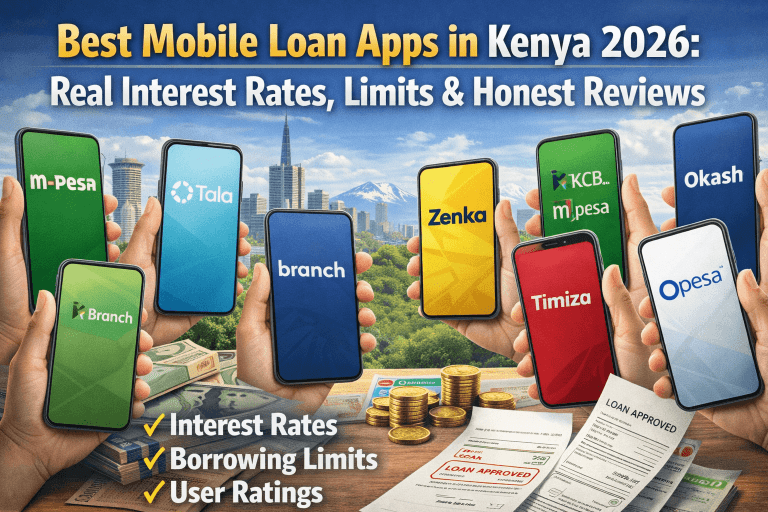
All HELB loans charge 4% per annum interest plus a KES 1,000 annual ledger fee. This is significantly cheaper than any commercial lender — Tala and Branch charge 180–240% annualised, while HELB charges 4%. Over a 10-year repayment period, HELB is the most affordable formal loan available to most Kenyans.
What the Means Test Actually Measures (And How to Prepare)
The Means Testing Instrument (MTI) determines how much HELB support you receive. Understanding what it measures helps you complete it accurately — which is important because underreporting or overreporting your household situation can result in less funding than you qualify for or trigger a fraud investigation.
The MTI considers:
Household income: The combined income of parents or guardians, including informal income, business income, and farming income — not just formal salaries.
Assets: Land ownership, number of rooms in the family home, type of construction (permanent, semi-permanent, temporary), and vehicle ownership.
Dependants: Number of children in the household being supported, including those in school or university.
Location: Rural households are generally assessed as having lower access to income opportunities than urban households at equivalent income levels.
What you should do before completing the means test: Gather accurate information about your parents’ or guardians’ income and assets. Provide honest, accurate answers — HELB has the right to verify the information you submit and misrepresentation can result in recovery of funds or blacklisting from future applications.
How to Apply for HELB Loan 2026/2027: Step by Step
First-Time Applicants: Online via hef.co.ke (Deadline: September 8, 2026)
Step 1: Go to hef.co.ke — this is the Higher Education Financing portal used by first-time applicants. Do not confuse it with helb.co.ke, which is for existing/continuing students.
Step 2: Click “Student Portal” and select “Register.” Create an account using your personal details — use your Safaricom number for registration as most HELB communications arrive via SMS.
Step 3: Activate your account via the link sent to your email. Check your spam folder if the email does not arrive within 10 minutes.
Step 4: Log in and navigate to the Loan Application section. Select the appropriate loan type — Undergraduate or TVET.
Step 5: Complete the Means Testing Instrument — the household financial assessment. This determines how much you receive. Answer every question accurately.
Step 6: Fill in your personal information including National ID number, KRA PIN, and course details as per your admission letter.
Step 7: Enter your bank account or M-Pesa details for the upkeep portion of your loan. This is the single most important detail to verify carefully — an incorrect M-Pesa number or account number means your upkeep money goes somewhere else and recovery is difficult.
Step 8: Enter your guarantors’ details — typically your parents’ ID numbers and registered phone numbers. For students under 18, a birth certificate is also required.
Step 9: Upload required documents in PDF format: National ID (or birth certificate if under 18), admission letter from your university or TVET institution, and any sponsorship letter if applicable.
Step 10: Review all details carefully, accept the terms and conditions, and submit your application. You will receive a confirmation SMS with your application reference number — save this.
Step 11: Track your application status through the “My Loans” section of the portal. With the September 8 deadline approaching, apply as early as possible — HELB has said applications are processed on a rolling basis, and late submissions closer to the deadline risk delays.
Second and Subsequent Applicants: Window Open Since June 1, 2026
If you have received a HELB loan before, you do not need to go through the full HEF portal process. The 2026/2027 subsequent loan window has been open since June 1, 2026. You have three options:
*USSD — Dial 642#: The fastest method. Works on any phone, no internet needed. Follow the prompts to apply for your subsequent loan. Takes five minutes.
HELB Mobile App: Download from Google Play Store. Log in with your registered phone number. Navigate to the scholarship or loan tab and select your course type. Complete the application in the app.
M-Pesa Mini App: Available through the M-Pesa app’s mini-apps section. HELB is integrated — apply directly through M-Pesa.
For all subsequent applications, a confirmation SMS with your application serial number confirms successful submission. Save that SMS as your proof of application.
Documents Required — Complete Checklist
For first-time undergraduate applicants:
- National ID (or birth certificate + waiting card if ID not yet issued)
- Admission letter from KUCCPS or university
- Parents’ National ID numbers and phone numbers (both parents if alive)
- Death certificate if either parent is deceased
- Bank account details or M-Pesa number for upkeep disbursement
- KRA PIN
For TVET first-time applicants: Same as undergraduate, plus confirmation of TVET institution and course name.
For self-sponsored students: All of the above plus confirmation that you are self-sponsored (not KUCCPS-placed), and university fee structure showing the amount to be paid.
For Jielimishe (employed) applicants: Admission letter, last three payslips certified by employer, copy of latest academic certificate certified by Commissioner of Oaths, KRA PIN and employer’s confirmation of employment.
When Is the HELB Application Deadline for 2026/2027?
First-time applicants (Undergraduate and TVET): Applications opened July 10, 2026, shortly after KUCCPS released its 2026/2027 placement results. The deadline is September 8, 2026. HELB has publicly stated this is a hard cutoff, not a soft target — applications not completed by then risk not being processed for this intake.
Continuing/subsequent students: The application window opened June 1, 2026, and runs alongside the first-time window. There is no fixed public closing date for subsequent applications, but HELB advises applying as early as possible to avoid delays in disbursement before semester begins.
If you miss the first-time application deadline entirely, you will need to wait for the next intake cycle — there is no late-application grace period.
How HELB Loan Repayment Works
This is what nobody explains clearly when you take the loan — and what surprises graduates every year.
When does repayment start? Repayment begins one year after completing your studies — not immediately after graduation. If you completed a four-year degree in 2026, your repayment obligation begins in 2027. HELB may also recall the loan earlier if they choose.
How long is the repayment period? A maximum of 120 months (10 years) for undergraduate and TVET loans. You can repay faster voluntarily — early repayment reduces the total interest paid.
What is the monthly repayment? This depends on your total loan amount. Using 4% annual interest on KES 60,000 over 10 years:
| Total Loan | Monthly Repayment (est.) | Total Repaid (est.) |
|---|---|---|
| KES 60,000 | ~KES 607 | ~KES 72,840 |
| KES 120,000 | ~KES 1,214 | ~KES 145,680 |
| KES 200,000 | ~KES 2,024 | ~KES 242,880 |
| KES 400,000 | ~KES 4,047 | ~KES 485,640 |
How does HELB collect repayment? For employed graduates, HELB uses a check-off system — they notify your employer, who deducts the monthly repayment from your salary and remits it to HELB. For self-employed graduates, you pay directly via M-Pesa Paybill 200200, account number being your HELB account number.
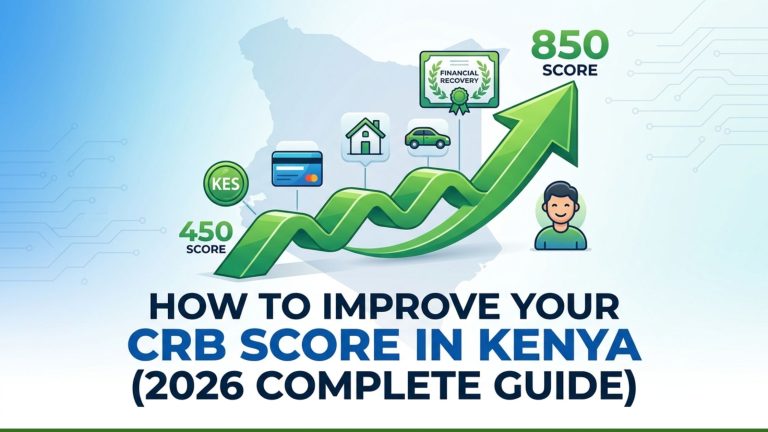
What happens if you default? A penalty of KES 5,000 per month is charged on defaulted accounts. Persistent default results in CRB listing — the same consequence as defaulting on a commercial mobile loan. A HELB CRB listing blocks bank loans, SACCO loans, and formal credit access for five years from the date of eventual settlement. See our CRB Kenya 2026 guide for the full picture.
The voluntary early payment option: You can pay off HELB at any time before the 10-year deadline. Every early payment reduces your outstanding balance, which reduces the interest that accrues. Students who make voluntary payments during their studies — even small amounts — graduate with a smaller loan balance and lower monthly repayment obligations.
The 5 Things Nobody Tells You About HELB
- The upkeep amount depends on your institution’s location. Students at universities in higher cost-of-living areas typically receive slightly higher upkeep allocations than those in lower-cost areas. The difference is small but real.
- You can receive both a loan and a scholarship. The Student-Centred Funding Model can combine a loan with a scholarship or bursary for the same student. If your household is assessed as extremely needy, a significant portion of your support may be a scholarship (not repayable) rather than a loan. Do not assume everything HELB gives you is a loan.
- Wrong M-Pesa details is the most common problem — and the hardest to fix. HELB disburses upkeep to the M-Pesa number you provide. If you enter a number incorrectly, the money goes to the wrong person. HELB can correct this but the process takes weeks and the money may already be gone. Triple-check the M-Pesa number before submitting your application.
- The means test can be updated if your family situation changes. If your household circumstances change significantly between application periods — a parent loses employment, a family member’s medical costs change your household finances — you can flag this to HELB for a reassessment. You are not locked into the initial assessment forever.
- Jielimishe is almost unknown among employed Kenyans who would qualify. If you are employed and considering a postgraduate degree, professional course, or Masters programme, the Jielimishe loan provides up to KES 600,000 at 4% per annum — far cheaper than any bank personal loan for the same purpose. Email [email protected] to check whether your employer qualifies.
Frequently Asked Questions
Is the HELB loan application open right now? Yes. First-time undergraduate and TVET applications for 2026/2027 opened July 10, 2026, and close September 8, 2026. Continuing student (subsequent) applications have been open since June 1, 2026.
How do I log in to the HELB student portal? Go to helb.co.ke and select “Student Portal,” then log in with your registered phone number and password. First-time applicants register instead at hef.co.ke, which is a separate portal.
How do I check my HELB loan balance? Log into your account at helb.co.ke, navigate to “My Loans,” and your current loan balance, repayment schedule, and payment history will be displayed. You can also call HELB’s contact centre or visit their offices in Nairobi at Anniversary Towers.
Can I apply for HELB if I am self-sponsored? Yes. Self-sponsored students are eligible for undergraduate HELB loans. The loan amount for self-sponsored students is sent directly to the university as tuition — unlike KUCCPS-placed students who also receive an upkeep component.
What if my parents refuse to provide their ID numbers? HELB requires guarantor information as part of the loan application. If parents are deceased, you provide death certificates. If parents are genuinely unavailable or there are special circumstances, contact HELB’s student services team — there is a process for exceptional cases that is not widely published.
Can I defer my HELB loan repayment? HELB allows deferment in specific circumstances — unemployment, further studies, or proven hardship. Contact HELB before your repayment deadline if you anticipate difficulty. Do not simply stop paying — the KES 5,000 monthly penalty and CRB listing activate automatically on missed payments without any prior communication.
Does HELB affect my CRB record? Yes — both positively and negatively. Consistent on-time HELB repayment after graduation builds a positive credit history. Default on HELB triggers CRB listing at all three Kenyan bureaux. A HELB CRB listing has the same five-year consequence as any other financial institution listing.
Can HELB garnish my salary? Yes. HELB has the legal authority to notify your employer and initiate salary check-off without your individual consent once your repayment period begins. For employed graduates, this is the default collection mechanism.
What happens if I miss the September 8 deadline? Your application will likely not be processed for the 2026/2027 first-time intake. HELB has stated this deadline is firm. Missed applicants would need to wait for the next application cycle.
Your Action Plan
If you are a first-time applicant joining university or TVET this year: go to hef.co.ke now, gather your documents (ID, admission letter, parents’ IDs, M-Pesa number), and apply before September 8, 2026. Do not wait until the final days — HELB processes applications on a rolling basis and early applicants face lower risk of delayed disbursement.
If you are a continuing student: dial *642# on your Safaricom line right now — the 2026/2027 subsequent window has been open since June 1, 2026.
If you are an employed Kenyan considering further studies: email [email protected] this week to check whether your employer qualifies for the Jielimishe loan. At 4% annual interest on up to KES 600,000, it is the cheapest education loan in Kenya.
HELB loan amounts, interest rates, and application processes verified from official HELB and HEF sources, August 2026. Deadlines confirmed: first-time applications close September 8, 2026; subsequent applications opened June 1, 2026. Repayment calculations are estimates based on 4% annual interest over 120 months. Verify current status at helb.co.ke and hef.co.ke before applying.
Related reading: