How Long Does It Take to Save KES 1 Million in Kenya?
To save KES 1 million feels enormous when you’re staring at a salary that disappears before the month ends. But here’s the truth most financial content won’t tell you: saving KES 1 million in Kenya is not a question of income — it’s a question of system.
The time it takes to save KES 1 million in Kenya depends on three things: how much you set aside every month, where you keep that money, and what is silently eating your balance. Whether you earn KES 30,000 or KES 100,000 a month, there is a realistic timeline for you in this guide — with real numbers, no fluff, and a clear path to get there.
The Simple Math First: How Long to Save KES 1 Million?
Before factoring in compounding or interest, here is the straightforward calculation — how many months to hit KES 1 million at different saving levels, assuming flat savings with zero returns:
| Monthly Savings | Time to KES 1 Million | Notes |
|---|---|---|
| KES 3,000 | ~28 years | Typical minimum saving for low income earners |
| KES 5,000 | ~167 months (13.9 years) | 20% of a KES 25,000 net salary |
| KES 10,000 | ~84 months (7 years) | 20% of a KES 50,000 net salary |
| KES 20,000 | ~50 months (4.2 years) | 20% of a KES 100,000 net salary |
| KES 30,000 | ~34 months (2.8 years) | Common target for aggressive savers |
| KES 50,000 | ~20 months (1.7 years) | Requires dual income or side hustle |
These timelines are without any interest or investment returns. In practice, most Kenyans get there faster — once they stop keeping their savings in the wrong place.
What Your Salary Actually Allows You to Save
To set realistic expectations, it helps to look at income honestly. The average gross monthly salary in Kenya’s formal sector is approximately KES 50,000, while the median monthly income across all workers — including informal sector workers — sits closer to KES 15,000.
In practical terms for someone in formal employment:
- KES 25,000–40,000 net salary: Saving KES 5,000–8,000/month is realistic with discipline
- KES 50,000–70,000 net salary: KES 10,000–15,000/month is achievable without extreme sacrifice
- KES 80,000–100,000 net salary: KES 20,000–30,000/month is the target; at this level, KES 1 million is within 3–4 years
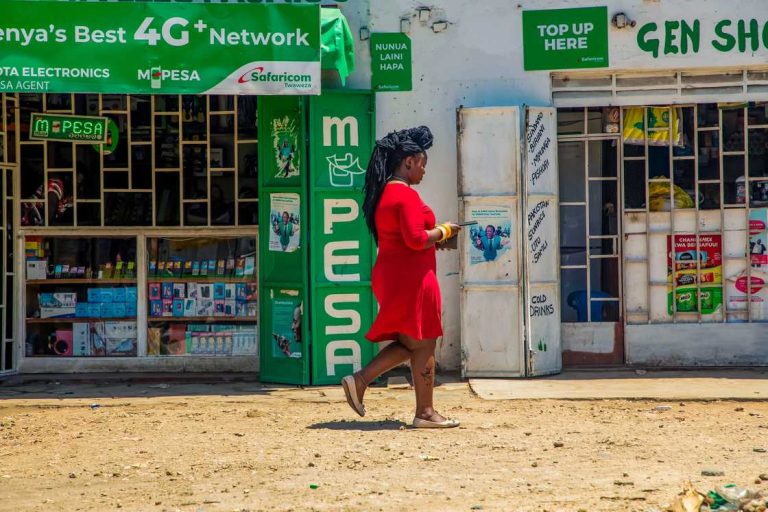
The challenge is not mathematics. It’s the gap between what you intend to save and what actually stays saved. For most Kenyans, that gap is filled by Fuliza, mobile loans, and M-Pesa spending.
How Compounding Shortens Your Timeline
Flat savings get you to KES 1 million eventually. Compounding gets you there significantly faster — and in Kenya, the most accessible compounding vehicle is a money market fund (MMF).
Here is what happens when you save KES 10,000 per month in an MMF earning a net yield of 10% annually, versus keeping the same amount in M-Pesa earning nothing:
| Monthly Savings | Vehicle | Years to KES 1 Million |
|---|---|---|
| KES 10,000 | M-Pesa (0%) | 8.3 years |
| KES 10,000 | Bank savings (3% net) | 7.5 years |
| KES 10,000 | MMF (10% net) | ~6.5 years |
| KES 15,000 | MMF (10% net) | ~4.4 years |
| KES 20,000 | MMF (10% net) | ~3.4 years |
The difference between saving in M-Pesa and saving in a money market fund is roughly 1–2 years off your timeline — on the exact same monthly savings amount. That is the cost of leaving your money in the wrong place.
At a 10% net annual return with daily compounding, your money does not just grow — it accelerates. Each month, the interest earned in previous months starts generating its own interest. By year 3, a meaningful portion of your balance is working for you without you doing anything.
Why a Money Market Fund?
MMFs in Kenya currently yield between 9% and 12% gross annually (approximately 7.65–10.2% net after the mandatory 15% Withholding Tax), with top-performing funds stretching to 14–18% gross. Your money accrues interest every single day, including weekends and public holidays, and you can withdraw within 24–72 hours without penalty. Minimum investment starts from as low as KES 100.
Compared to a bank savings account paying 2–4% gross (and not compounded daily), the difference over 5 years of saving is the equivalent of several months of your salary — for free.
The 5 Things That Are Slowing You Down
Many Kenyans are saving — just not accumulating. Here is why:
1. Fuliza and Mobile Loan Dependency
Safaricom’s Fuliza disbursements rose 49% to KES 1.47 trillion in the financial year ended March 2026, with 17.7 million active users turning to the overdraft facility to complete M-Pesa transactions. The average loan size is around KES 218 — small amounts, used constantly.
The problem is not the loan size. It’s the structure. Fuliza charges a daily access fee of 1.083% per day on the outstanding balance, and any incoming M-Pesa money first goes to repay Fuliza before reaching your balance. This means every salary, every client payment, every transfer — is intercepted. You are perpetually starting your month in the negative before you have made a single decision.
If you use Fuliza 10–15 times a month on small amounts, you can easily lose KES 2,000–6,000 per year in access fees alone. That is money that could have been saved — and compounded.
2. Saving in M-Pesa Instead of an MMF
M-Pesa earns zero returns. Every month you leave savings in your M-Pesa wallet rather than an MMF is a month of compounding lost. Over 5 years of saving KES 10,000/month, the difference between M-Pesa and a 10% net MMF is over KES 120,000 in foregone returns — more than a full year of savings.
3. No Emergency Fund, So Savings Get Raided
Without a dedicated emergency buffer of at least 1–3 months of expenses, every unexpected cost — a hospital bill, car repair, school fees gap — hits your savings account. You build up KES 80,000, something happens, you drop back to KES 20,000. The cycle repeats and the milestone keeps moving.
Build your emergency fund first. Keep it in an MMF — it earns returns while sitting idle, and you can access it within 24 hours when genuinely needed.
4. Lifestyle Creep After Salary Increments
Most Kenyans get a raise and upgrade their lifestyle — better rent, better phone, more spending — before upgrading their savings rate. If your saving amount does not rise with your income, you are working harder for the same financial outcome.
The rule: every time your income increases, direct at least 50% of the increment straight into savings before adjusting your spending.
5. One Income Stream
If you are relying solely on a salary, your savings rate is capped by your employment income. Adding even KES 5,000–10,000 a month from a side hustle — freelancing, tutoring, reselling — can shave years off your KES 1 million timeline.
The math: KES 5,000 extra per month saved in an MMF at 10% net = approximately KES 103,000 in extra returns over 3 years, on top of the KES 180,000 in additional principal. That is a KES 283,000 boost from one small additional income stream.
The System That Actually Works
Discipline is not enough. You need a structure that saves automatically, before your spending gets a chance. Here is the framework:
Step 1 — Know your real monthly spend Pull your M-Pesa statement for the last 3 months (Dial *334# → My Account → Statement). Categorise every transaction. Most people are shocked by what they find — especially Fuliza fees, food delivery charges, and impulse M-Pesa purchases.
Step 2 — Pay yourself first, automatically The moment your salary lands, move your savings amount to your MMF immediately — before rent, food, or any other expense. If you wait to save what is left at the end of the month, there will be nothing left.
Most MMFs allow you to set up a standing order or recurring M-Pesa transfer. Use it.
Step 3 — Build your emergency fund before anything else Target 1 month of expenses first, then 3 months. Keep it in your MMF — not a separate account that earns nothing. This fund stops emergencies from destroying your savings progress.
Step 4 — Kill expensive daily-fee debt If you are on Fuliza or other mobile loans, clear the balance entirely before building savings. The daily fee structure means these loans cost more the longer they are outstanding. Pay them off, then redirect that money into savings.
Step 5 — Track your milestone monthly Check your MMF balance every month on a fixed date. Watching the number grow — including the daily interest accrual — is one of the most powerful motivators to keep saving. Many fund apps show your daily earnings in real time.
What to Do When You Hit KES 1 Million
Reaching KES 1 million is a milestone, not a destination. Here is how to use it wisely:
- Do not cash out. KES 1 million left invested at 10% net earns KES 100,000 per year without touching the principal. That is your money working a part-time job.
- Diversify. Consider shifting a portion into government bonds (currently yielding 12–14% for infrastructure bonds) or SACCO shares (dividends of 14–20% annually from top SACCOs) for higher returns.
- Use it as leverage. In a SACCO, KES 1 million in share capital typically qualifies you for a loan of KES 3–5 million at 12–14% per annum — significantly cheaper than any bank loan.
- Keep 3–6 months liquid. Even after diversifying, maintain your emergency fund in an accessible MMF.
KES 1 million invested well is the beginning of a portfolio that grows without requiring more of your time or energy. It is the point where money starts working as hard as you do.
Your KES 1 Million Timeline at a Glance
| Net Salary | Realistic Monthly Savings | Savings Vehicle | Time to KES 1M |
|---|---|---|---|
| KES 25,000 | KES 5,000 (20%) | MMF at 10% net | ~7.8 years |
| KES 40,000 | KES 8,000 (20%) | MMF at 10% net | ~5.5 years |
| KES 50,000 | KES 10,000 (20%) | MMF at 10% net | ~6.5 years |
| KES 50,000 | KES 15,000 (30%) | MMF at 10% net | ~4.4 years |
| KES 80,000 | KES 20,000 (25%) | MMF at 10% net | ~3.4 years |
| KES 100,000 | KES 30,000 (30%) | MMF at 10% net | ~2.5 years |
| Any salary | KES 10,000 salary + KES 5,000 side hustle | MMF at 10% net | ~4.7 years |
Note: Timelines are estimates based on steady monthly contributions with daily compounding at 10% net annual yield. Actual results will vary based on fund performance and contribution consistency.
The Bottom Line
Saving KES 1 million in Kenya is achievable at almost any formal income level — the variable is time and system, not luck. The biggest determinants are not how much you earn, but whether you save before you spend, where you keep your savings, and whether mobile debt is silently draining your progress.
The fastest legitimate path: automate savings into an MMF on payday, eliminate Fuliza dependency, add one side income stream, and leave the money alone to compound.
Start with whatever you can today — even KES 3,000 a month is the beginning of a savings habit. Increase the amount with every income increment. The Kenyan who starts saving KES 5,000 a month today will be in a far better position in 5 years than the one waiting for a bigger salary to “start properly.”
Compare current money market fund yields at Serrari or Money254 to find the best place for your savings right now.
Disclaimer: All projections in this article are illustrative estimates based on consistent monthly contributions and current MMF yield averages. Actual returns will vary with fund performance and market conditions. This article is for informational purposes only and does not constitute financial advice. Consult a licensed financial advisor for personalised guidance.
Sources: Wage.is Kenya (February 2026), Safaricom Financial Services Data (FY March 2026), AllAfrica / Daily Nation Fuliza Report (May 2026), Credizen Fuliza Review (2026), Money254, KNBS.