How to Sell NSE Shares in Kenya: Step-by-Step Guide (2026)
How to sell NSE shares in Kenya is simpler than most investors expect — but only if you know the exact steps, the costs involved, and the common mistakes that can delay or block your sale. This guide walks you through the complete process of how to sell NSE shares in Kenya, from placing your order to receiving money in your bank account.
What You Need Before You Can Sell NSE Shares in Kenya
Before placing a sell order, make sure you have the following in place:
A CDS account — your Central Depository System account is where your shares are held. You must have one to sell. If you inherited shares or received them as a bonus, confirm with your broker that the shares are registered in your CDS account.
A licensed stockbroker — you cannot sell NSE shares directly. You must go through a Capital Markets Authority (CMA)-licensed stockbroker. If you already bought shares, you likely have a broker. If not, you need to open an account with one.
Your shares must be fully settled — when you buy shares on the NSE, settlement takes three business days (T+3). You cannot sell shares that haven’t settled yet.
A verified bank account linked to your CDS — sale proceeds are paid to the bank account on your CDS record. If your bank details have changed, update them before selling.
How to Sell NSE Shares in Kenya: Step by Step
Step 1: Contact Your Stockbroker
Call, email, or log into your broker’s online platform to place a sell order. You will need to provide:
- Your CDS account number
- The company whose shares you want to sell (e.g., Safaricom, Equity Bank, KCB)
- The number of shares you want to sell
- Your preferred price — either at market price (sell immediately at current market rate) or a limit price (only sell if the price reaches your target)
Most used stockbrokers in Kenya in 2026:
- Faida Investment Bank
- Dyer & Blair
- Standard Investment Bank (SIB)
- AIB-AXYS Africa
- Kingdom Securities
- NIC Securities
Many now have online portals or mobile apps where you can place sell orders directly without calling.
Step 2: Your Broker Places the Order on the NSE
Once you give the instruction, your broker places the sell order on the Nairobi Securities Exchange. The order goes into the order book and waits to be matched with a buyer.
At market price: your order executes almost immediately during trading hours, at the best available price.
At a limit price: your order sits in the book until a buyer meets your price, or until you cancel the order. There is no guarantee a limit order will execute.
NSE trading hours are Monday to Friday, 9:30am to 3:00pm. Orders placed outside these hours are queued for the next trading session.
Step 3: Your Order Is Matched and Executed
When a buyer matches your sell order, the trade is executed. You receive a contract note from your broker — a document confirming the trade details including the price, number of shares sold, and applicable charges.
Review your contract note carefully. It should show:
- Number of shares sold
- Price per share
- Gross proceeds
- Deductions (brokerage commission, NSE levy, CDSC fee, withholding tax if applicable)
- Net proceeds
Step 4: Settlement (T+3)
Settlement on the NSE takes three business days after the trade date. During this period:
- The shares move out of your CDS account to the buyer’s account
- The sale proceeds move from the buyer’s broker to your broker
On day T+3, your broker receives the funds and credits your account.
Step 5: Receive Your Money
Your broker transfers your net proceeds to the bank account linked to your CDS account. Depending on your broker, this may happen on the same day as settlement or within 1–2 additional business days.
If you need the money faster, ask your broker about early payment options — some brokers advance proceeds before full settlement.
Costs When You Sell NSE Shares in Kenya
Every share sale attracts several charges. Here is what gets deducted from your proceeds:
| Charge | Rate |
|---|---|
| Brokerage commission | 1.5% of transaction value (minimum KES 100) |
| NSE levy | 0.12% of transaction value |
| CDSC fee | 0.12% of transaction value |
| CMA levy | 0.025% of transaction value |
| Total approximate cost | ~1.765% of transaction value |
Example: If you sell KES 100,000 worth of Safaricom shares, you pay approximately KES 1,765 in charges and receive KES 98,235.
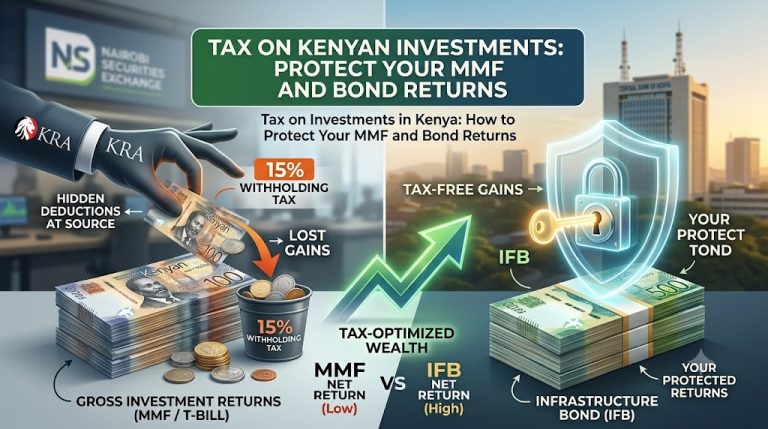
Note: Withholding tax on dividends is separate from share sale costs — it applies to dividend income, not capital gains. Kenya does not currently tax capital gains on NSE shares.
How Long Does It Take to Sell NSE Shares in Kenya?
Here is a realistic timeline:
- Placing the order: immediate (during trading hours)
- Order execution: same day (market order) or variable (limit order)
- Settlement: 3 business days after execution (T+3)
- Funds in your bank: 1–2 business days after settlement
Total from instruction to money in bank: typically 4–6 business days.
If you place a limit order that doesn’t execute, the timeline starts again when a buyer is found.
Selling Inherited or Bonus Shares
If you inherited shares or received them as a bonus issue, the process has an extra step — you must first ensure the shares are properly registered in your name in the CDS system.
For inherited shares:
- Obtain letters of administration or a grant of probate from court
- Submit these to the stockbroker or CDSC along with the deceased’s CDS account details
- The shares are transferred to your CDS account before you can sell
This process can take several weeks. Start early if you need liquidity.
For bonus shares: Bonus shares appear in your CDS account automatically when a company issues them. They are immediately sellable once settled — no additional steps required.
Common Mistakes When Selling NSE Shares in Kenya
Selling during a thin market. Some NSE counters are illiquid — few buyers and sellers on any given day. If you place a limit order on an illiquid stock at an ambitious price, it may sit for days or weeks without executing. For illiquid stocks, market orders are safer if speed matters.
Not updating your bank details. If your bank account has changed since you opened your CDS, proceeds will be sent to the old account. Update your details with your broker well in advance.
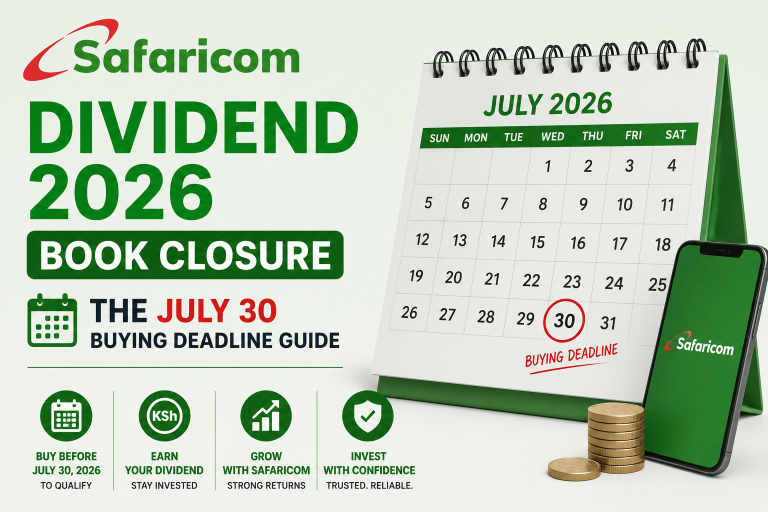
Selling during a dividend book close period. If you sell shares just before the book close date, you lose the dividend for that year. Check the NSE dividend calendar before selling if you were expecting a dividend.
Ignoring the contract note. Always read your contract note and compare it to what you expected. Errors are rare but do happen.
Panic selling. This is more of an investment mistake than a process mistake, but it bears saying: the NSE is a long-term market. Selling because a share price dipped 5% on news that doesn’t change the company’s fundamentals often means locking in a loss you didn’t need to take.
Can You Sell NSE Shares Online in Kenya?
Yes. Several brokers now offer online trading platforms and mobile apps where you can place sell orders without calling or visiting a branch:
- Faida Investment Bank — online portal
- SIB — online trading platform
- AIB-AXYS Africa — mobile app
- Dyer & Blair — client portal
Online selling is convenient but confirm your broker’s platform is active and your account is fully verified before relying on it for time-sensitive sales.
Frequently Asked Questions
Can I sell NSE shares without a broker? No. All NSE trades must go through a CMA-licensed stockbroker. There is no direct retail access to the exchange.
What happens if no buyer is found for my shares? Your order remains in the order book until it is matched or you cancel it. For limit orders, this could take days or weeks on illiquid counters.
Can I sell partial shares? No. NSE shares are sold in whole units. You cannot sell half a share.
Do I pay tax when I sell NSE shares in Kenya? Kenya does not impose capital gains tax on NSE listed shares as of 2026. You pay transaction costs (brokerage, levies) but not tax on any profit you make from the sale.
How do I know the current price of a share before selling? Check live NSE prices at nairobi securities exchange website, your broker’s platform, or financial data sites that track NSE counters in real time.
The Bottom Line
Selling NSE shares in Kenya is a straightforward process once you understand the steps: instruct your broker, wait for your order to execute, allow T+3 settlement, and receive proceeds in your bank account within about a week.
The key is to know your costs upfront, keep your bank details updated, and choose between a market order (speed) or limit order (price control) based on what matters more in your situation.
If you have never sold shares before, call your broker directly the first time — walk through it with them on the phone. Once you’ve done it once, you’ll know exactly what to expect.
This guide reflects NSE trading rules and costs as of 2026. Always confirm current charges and settlement rules with your licensed stockbroker. The NSE and CMA may update regulations — verify at nse.co.ke and cma.or.ke.