Can You Become Rich Using Only SACCOs in Kenya?
Can you become rich using only SACCOs? Kenya’s regulated SACCO sector crossed the KES 1.13 trillion mark in late 2025 — a number that tells you something important about who is actually building wealth in this country. Membership has more than doubled in ten years, from 3.08 million to 7.39 million. Total savings have quadrupled to KES 749.43 billion. SACCOs now account for over 6.4% of Kenya’s GDP.
And yet the question most Kenyans ask before joining is the same one they are slightly embarrassed to say out loud: can you actually become rich using SACCOs?
Not comfortable. Not financially stable. Rich. Land, a rental property, a retirement nest that covers KES 100,000+ per month without selling anything. Is that achievable through SACCOs — and SACCOs alone?
The honest answer is nuanced, and this guide gives it to you completely — the mechanics, the numbers, the limits, and the combination that actually produces generational wealth in Kenya.
Why SACCOs Are Kenya’s Most Underrated Wealth Vehicle
Before addressing the headline question, it is worth understanding what makes SACCOs structurally powerful — because most Kenyans join for the wrong reason (cheap loans) and miss the deeper wealth mechanism entirely.
1. You Are an Owner, Not a Customer
Unlike a bank, where your deposits earn interest but profits go to shareholders, a SACCO is a member-owned cooperative. When your SACCO makes a profit, that profit is distributed back to members as dividends on share capital and interest on deposits. There are no external shareholders extracting value from your savings.
This ownership structure is the foundation of everything that follows. Your SACCO’s success is your financial success — directly.
2. Dividends That Banks Cannot Match
For the financial year ended December 31, 2025, Kenya’s top-performing SACCOs announced the following returns to members:
| SACCO | Dividend on Share Capital | Interest on Deposits |
|---|---|---|
| Tower SACCO | 20% | — |
| Ports SACCO | 20% | 12.5% |
| Kenya National Police DT SACCO | 17% | — |
| Stima SACCO | 16% | 11% |
| Yetu SACCO | 19% | — |
| Unaitas SACCO | ~14% | ~10% |
Compare this to what a standard bank savings account pays: 2–4% gross annually, not compounded daily, subject to 15% Withholding Tax. The gap between a top SACCO’s dividend and a bank savings account is 13–18 percentage points per year — on the same shillings.
A member with KES 500,000 in share capital at a SACCO paying 16% dividends receives KES 80,000 in annual dividends alone. The same KES 500,000 in a bank savings account at 3% yields KES 15,000 — before WHT reduces it further.
3. The Loan Multiplier: The SACCO’s Most Powerful Tool
Here is the mechanism that has bought land for hundreds of thousands of Kenyan teachers, civil servants, and professionals — and that most people outside SACCO membership have never properly understood.
Once you have accumulated share capital in a SACCO, you typically qualify to borrow 3–5 times your share capital at 12–14% per annum on a reducing balance. This is Kenya’s cheapest formal credit. Commercial banks charge 18–25%. Mobile lenders charge far more.
In practice:
- KES 100,000 in share capital → KES 300,000–500,000 loan eligibility
- KES 500,000 in share capital → KES 1.5M–2.5M loan eligibility
- KES 1,000,000 in share capital → KES 3M–5M loan eligibility
That loan, directed into a productive asset — a plot of land, a rental unit, a business expansion — generates returns that are significantly higher than the 12–14% annual loan cost. A rental unit generating KES 20,000/month on a KES 2 million investment yields 12% annually — matching the loan cost — with the asset value itself appreciating over time.
This is the SACCO wealth loop that the Kenyan middle class has used for decades: save consistently → build share capital → leverage share capital into cheap loans → purchase productive assets → repay loan from asset income → repeat at larger scale.
In 2024 alone, SACCOs disbursed KES 542 billion in new loans to members — primarily directed into land, housing, business equipment, and school fees. This confirms SACCOs as Kenya’s primary asset-financing institution for the middle class.
The SACCO Wealth Compounding Model: Real Numbers Over Time
Here is what consistent SACCO saving looks like over a 10, 20, and 30-year horizon — the most important financial calculation most Kenyans never run.
Assumptions: KES 10,000/month in share capital contributions, 16% average annual dividend, dividends reinvested as additional share capital.
| Year | Total Contributions | Accumulated Share Capital (with reinvested dividends) | Annual Dividend at 16% |
|---|---|---|---|
| Year 5 | KES 600,000 | ~KES 850,000 | ~KES 136,000 |
| Year 10 | KES 1,200,000 | ~KES 2,100,000 | ~KES 336,000 |
| Year 15 | KES 1,800,000 | ~KES 4,500,000 | ~KES 720,000 |
| Year 20 | KES 2,400,000 | ~KES 9,200,000 | ~KES 1,472,000 |
| Year 30 | KES 3,600,000 | ~KES 38,000,000 | ~KES 6,080,000 |
Illustrative projections based on consistent 16% annual dividend reinvestment. Actual returns vary by SACCO and market conditions.
By year 20, a member who contributed KES 10,000/month has accumulated approximately KES 9.2 million in share capital — generating over KES 1.4 million per year (KES 120,000/month) in dividends alone, without withdrawing anything from the principal.
By year 30, the numbers reach a level that most Kenyans would call genuinely wealthy: KES 38 million in share capital generating over KES 6 million annually — KES 500,000 per month in passive dividend income.
This is what consistent SACCO membership over a full career looks like when you reinvest dividends instead of spending them. The mathematics are not complicated. The discipline is.
The SACCO-to-Property Pipeline: How the Middle Class Actually Builds Wealth
The most common path to significant wealth through SACCOs in Kenya is not share capital alone — it is using share capital as leverage for property acquisition.
Here is the typical trajectory:
Phase 1 (Years 1–3): Build share capital KES 5,000–10,000/month in contributions. Focus on consistency. In 3 years, a member contributing KES 8,000/month has approximately KES 300,000–350,000 in share capital, qualifying for a KES 900,000–1.5 million loan.
Phase 2 (Years 3–5): First loan — land purchase Use the loan to purchase a plot of land in a growth corridor (Kiambu, Machakos, Nakuru periphery, Kajiado). Repay the loan over 3–5 years from salary or other income while continuing SACCO contributions.
Phase 3 (Years 5–10): Second loan — construction Share capital has grown significantly through continued contributions and reinvested dividends. Second loan funds construction of a rental unit — 2 or 3 rooms generating KES 15,000–25,000/month.
Phase 4 (Years 10–20): The flywheel Rental income partially funds loan repayments and SACCO contributions. Share capital compounds. A third or fourth loan becomes available for a second property. By year 15–20, the member owns 2–3 income-generating properties and has KES 3–5 million in share capital generating annual dividends of KES 450,000–800,000.
This is not a theoretical model. It is the documented experience of thousands of Kenyan teachers, civil servants, nurses, and police officers who built retirement security through SACCOs at income levels most people would consider insufficient for wealth building.
The Honest Answer: Can You Become Rich Using ONLY SACCOs?
Yes — and no. Here is the nuanced truth.
Yes, if “rich” means:
- A retirement portfolio of KES 10–40 million generating passive income of KES 100,000–500,000/month
- Owning 2–3 rental properties funded through SACCO loans
- Complete financial independence from formal employment by your late 50s
- A net worth that places you in the top 5–10% of Kenyan households
This outcome is achievable through SACCOs alone — if you start early, contribute consistently, reinvest dividends, and use SACCO loans strategically for productive assets. It has been done by hundreds of thousands of Kenyans on ordinary civil service salaries.
No, if “rich” means:
- Rapid wealth accumulation in 3–5 years
- Liquidity — SACCO savings are deliberately illiquid (non-withdrawable BOSA deposits are by design locked)
- Participation in global equity markets or high-growth technology investments
- A portfolio growing faster than Kenya’s top-performing SACCOs’ 14–20% per year
SACCOs have a real ceiling. They do not invest in NSE-listed equities, international markets, or high-growth assets. Their returns are excellent by Kenyan standards but are structurally capped by the cooperative model’s focus on stability and member protection over aggressive growth.
The Real Risks: What Most SACCO Promoters Won’t Tell You
This is where many financial guides get dishonest through omission. SACCOs carry genuine risks, and understanding them is essential to choosing and using them correctly.
Governance Failure and Fraud
The Kenyan SACCO sector’s single greatest risk is governance failure — which can range from incompetent management to outright fraud.
Ekeza SACCO, founded by televangelist David Kariuki Ngare (alias Gakuyo), defrauded over 80,000 members of more than KES 1 billion. Members who had saved diligently for years — some for decades — found their branches closed and their savings inaccessible overnight. Years of legal proceedings later, many still have not been fully compensated.
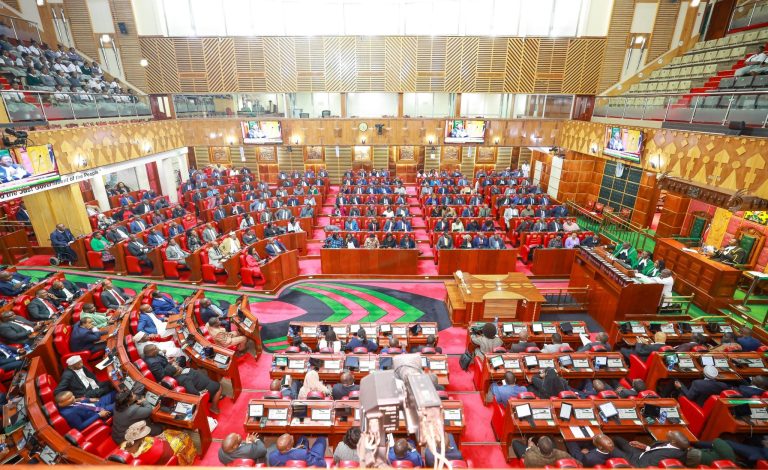
Ekeza is the most visible case, but not the only one. Mwalimu SACCO and Stima Investment Co-operative have together been estimated to have cost members over KES 3.6 billion through mismanagement and fraud. In February 2026, at the 11th Annual SACCO Leaders’ Convention in Mombasa, Cabinet Secretary Wycliffe Oparanya announced a sweeping government clean-up of a sector where nearly KES 12 billion had been lost through fraud and accounting misstatements.
This is not an argument against SACCOs. It is an argument for SASRA regulation — which is the single most important filter when choosing a SACCO.
Employer Non-Remittance
In 2024, employers failed to remit KES 3.5 billion of members’ salary deductions to their respective SACCOs. This means members’ payslips showed SACCO contributions being deducted, but those funds never reached their accounts — accumulating as neither savings nor share capital, and generating no dividends.
This risk is highest in smaller, employer-linked SACCOs and in organisations with cash flow challenges. The protection: check your SACCO passbook or online statement monthly, and raise any discrepancy immediately with both your employer’s HR department and your SACCO.
Liquidity Lock-In
BOSA (Back Office Service Activity) deposits — which earn the highest dividends — are non-withdrawable except under specific circumstances: resignation of membership, retirement, death, or specific emergency provisions.
This is by design — it is what allows SACCOs to place long-term, higher-yielding deposits. But it means your SACCO savings are not available for emergencies. This is why maintaining a separate MMF emergency fund of 3–6 months of expenses is essential even for committed SACCO members.
The Over-Leverage Trap
The ability to borrow 3–5 times your share capital is the SACCO’s greatest strength — and its most significant personal risk. Members who borrow against their maximum limit for non-productive purposes (wedding expenses, consumer goods, school fees emergencies) and then face income disruption can find themselves in a debt trap where loan repayments consume an unsustainable portion of their salary.
The rule: SACCO loans should go into productive assets that generate returns equal to or exceeding the loan interest rate. If the loan is for consumption, the repayment burden shrinks your savings capacity without building any offsetting asset.
How to Choose a SACCO That Will Actually Build Your Wealth
Given the risks, the SACCO you choose matters enormously. Here is the checklist that protects you:
Step 1: Verify SASRA regulation Every legitimate SACCO that handles member deposits must be licensed by the SACCO Societies Regulatory Authority. Verify any SACCO at sasra.go.ke before joining. If it is not on the SASRA register, do not join regardless of the dividends offered or the person recommending it.
Step 2: Check the dividend history over 5+ years One good year proves nothing. Five consecutive years of dividends above 12% indicates genuine, consistent performance. Request to see the audited financial statements for the last 5 years before joining.
Step 3: Assess the asset base and loan-to-deposit ratio A well-managed SACCO should have total assets above KES 1 billion for reasonable institutional stability, and a loan-to-deposit ratio below 80%. Ratios above 90% indicate an aggressive lending posture that increases default risk.
Step 4: Evaluate governance and transparency Does the SACCO publish its annual report publicly? Are AGM minutes available to members? Is there an active, independent supervisory committee? Governance quality is the single biggest predictor of long-term SACCO health.
Step 5: Consider open-membership SACCOs if employer-linked ones are unavailable Not every Kenyan works for an employer with a strong linked SACCO. Open-membership options include:
- Stima SACCO (KES 75 billion assets, 16% dividend FY2025) — open to all Kenyans
- Harambee SACCO — government-linked but open membership available
- Cosmopolitan SACCO — open membership, strong governance record
- Tower SACCO (20% dividend FY2025) — Ol’Kalou-based, open to teachers nationally
The Optimal Kenyan Wealth Stack: Where SACCOs Fit Best
Using SACCOs alone is possible — but combining them with other vehicles produces better outcomes faster. Here is the structure that the most financially successful Kenyans use:
| Vehicle | Role | Allocation |
|---|---|---|
| SACCO share capital | Long-term compounding + loan leverage | 30–40% of monthly savings |
| SACCO BOSA deposits | Higher-yield locked savings | Part of SACCO allocation |
| Money Market Fund | Liquid emergency buffer + short-term savings | 20–30% of monthly savings |
| Government Infrastructure Bonds | Tax-exempt fixed income (12–14% p.a.) | 15–20% of savings, via CBK DhowCSD |
| Property (via SACCO loan) | Income-generating asset + capital appreciation | Funded by SACCO loan |
| NSE equities (optional) | Long-term growth for higher risk tolerance | 10–15% for those comfortable with volatility |
The SACCO is the core — the savings discipline engine and the cheapest credit facility. The MMF handles liquidity. Bonds provide tax-efficient stable returns. Property, funded through SACCO leverage, generates passive income.
Together, this combination can reasonably produce the kind of outcome most Kenyans would describe as financially free — and it requires no extraordinary income to execute. It requires time, consistency, and the right structure.
The Bottom Line: Can You Become Rich Using Only SACCOs
Can you become rich using only SACCOs in Kenya? Yes — if rich means financial independence, a retirement portfolio generating passive income well above average urban living costs, and property assets funded through strategic borrowing. Hundreds of thousands of Kenyan teachers, civil servants, and nurses have achieved exactly this through decades of consistent SACCO membership.
No — if rich means rapid growth, high liquidity, or returns that outpace the global equity market.
The answer for most Kenyans is to use SACCOs as the foundation — the most disciplined, highest-dividend, cheapest-credit vehicle available to ordinary Kenyans — and pair them with an MMF for liquidity and government bonds for tax-advantaged fixed income.
Start with SASRA verification, choose a SACCO with a 5-year dividend track record above 12%, contribute consistently, reinvest dividends, and use your first loan for land. The mathematics of compound membership do the rest.
Verify any SACCO’s SASRA licensing status and check the latest dividend announcements at sasra.go.ke and money254.co.ke.
Disclaimer: All dividend figures and financial projections are illustrative estimates based on publicly announced 2025 Financial Year results and should not be taken as guarantees of future returns. SACCO performance varies. Past dividends do not guarantee future dividends. This article is for informational purposes only and does not constitute financial advice. Conduct thorough due diligence before joining any SACCO.
Sources: Tuko.co.ke SACCO Dividends 2026 (March 2026), Money254.co.ke SACCO Dividends 2026 (March 2026), Livelife.ke Best SACCOs Kenya 2026 (January 2026), SACCOShares.com Best SACCOs 2026 (March 2026), TrueMatch Kenya Best SACCOs 2026 (January 2026), Dawan Africa SACCO Leaders’ Convention Report (February 2026), Business Daily Africa SACCO Fraud Report, AllAfrica Ekeza SACCO Investigation (March 2019), Standard Media SACCO Crackdown Report.