How to Save Money in Kenya with a Small Income (2026 Guide)
Saving money when earning KES 15,000–30,000 in Kenya can feel impossible—especially when rent alone eats up half your paycheque. Standard personal finance advice telling you to “save 20% of your salary” or “stop buying coffee” fails because it was designed for people who already have surplus cash.
This guide addresses real Kenyan financial realities: irregular income, family support expectations, M-Pesa transaction costs, and months where margins are razor-thin.
Quick Summary: How to Save Money on a Low Salary in Kenya
- Pay Yourself First: Automate moving 5–10% of your earnings to savings the second money lands.
- Lock Impulse Cash: Use M-Pesa Goal Savings to keep short-term funds away from daily spending.
- Leverage SACCOs: Save via payroll check-off or standing orders for 10–15% annual dividends and 12% emergency loan rates.
- Cut Hidden Transaction Fees: Consolidate M-Pesa withdrawals and use Hustler Fund or KCB M-Pesa instead of high-cost loan apps.
- Buy Food in Bulk: Lower monthly grocery bills by 30–50% by buying staples at wholesale markets like Wakulima or Kongowea.
Why Saving Money on a Low Salary Feels Impossible in Kenya
Before implementing solutions, it helps to understand why traditional saving systems fail:
- The Order of Operations Is Backwards: The default routine for most households is: Income → Rent → Food → Family support → Emergencies → Savings. When you spend first, there is rarely anything left over.
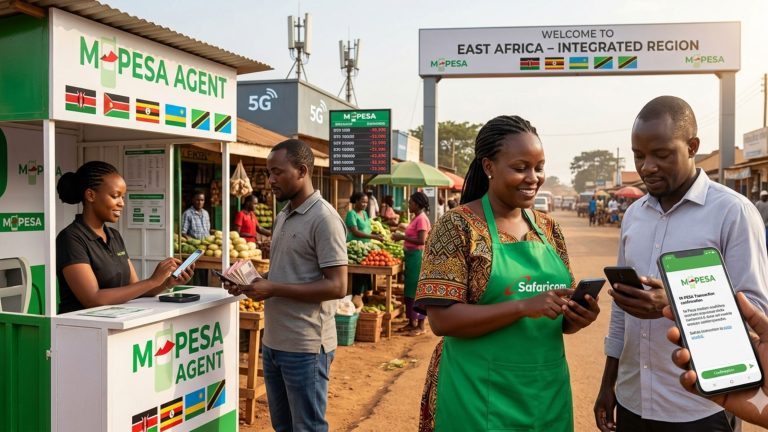
- M-Pesa Makes Spending Frictionless: Sending KES 500 takes five seconds. Without physical cash friction, funds vanish faster than in previous generations.
- Social Obligations Are Unavoidable: Harambees, medical emergencies, funerals, and family support are regular events in Kenya. Any budget that ignores them will collapse when the next text request arrives.
The Core Habit: Pay Yourself First
Every sustainable saving strategy comes back to one core mechanical change: reversing the order of money flow.
- Standard Flow (Fails): Receive Income → Spend → Save what remains ($0)
- Optimized Flow (Works): Receive Income → Transfer Savings → Live on what remains
The moment any money hits your wallet or M-Pesa—salary, side gig pay, or casual work—move a fixed percentage immediately.
Recommended Payday Target
- KES 15,000 salary: Save KES 1,500 (10%) or start at KES 750 (5%)
- KES 20,000 salary: Save KES 2,000 (10%) or start at KES 1,000 (5%)
- KES 30,000 salary: Save KES 3,000 (10%) or start at KES 1,500 (5%)
Building the automatic habit matters far more than the starting amount.
12 Practical Strategies to Save Money on a Small Income in Kenya
1. Lock Funds with M-Pesa Goal Savings
You don’t need a traditional bank account to start saving. Access M-Pesa Goal Savings via the M-Pesa app under Grow → Lock Savings. Setting a target date makes impulse spending structurally impossible, as early withdrawals carry a penalty.
- Action: Set a KES 5,000 goal over 3 months and automate a KES 1,700 transfer every payday.
2. Set Up a SACCO Check-Off or Standing Order
SACCOs are ideal vehicles for small-income earners. Ask your employer’s HR to deduct contributions directly to a SACCO Paybill before your net salary hits your account.
- Why it beats bank savings: SACCOs offer 10–15% annual dividends and grant loan access at ~12% interest per year after 6 months of contributions.
- Borrowing cost comparison: Borrowing KES 10,000 over 30 days costs KES 300 in a SACCO vs. KES 750 on M-Shwari or up to KES 3,000+ on predatory loan apps.
3. Take the KES 50 Daily Challenge
Sustaining monthly discipline can be hard. Focus instead on micro-saving KES 50 daily by walking a short matatu distance, carrying water, or skipping soft drinks.
- The Math: KES 50/day = KES 1,500/month = KES 18,000/year. Deposited into a Money Market Fund earning ~12% annually, this grows to over KES 20,600 by year-end.
4. Create a Dedicated “Social Obligations” Budget
Harambees and family support happen every year. Stop treating predictable social costs like unexpected emergencies.
| Obligation Type | Estimated Annual Cost | Monthly Buffer Target |
| Harambees & Gifting | KES 3,000 – KES 8,000 | KES 250 – KES 670 |
| Weddings & Events | KES 3,000 – KES 6,000 | KES 250 – KES 500 |
| Funerals & Emergencies | KES 2,000 – KES 6,000 | KES 170 – KES 500 |
| Total | KES 8,000 – KES 20,000 | KES 670 – KES 1,670 |
- Action: Set up a separate M-Pesa sub-account labelled “Social” and fund it monthly so family requests don’t wreck your core savings.
5. Shop Food Staples at Wholesale Markets
Food is typically the second-largest expense after rent. Buying non-perishable staples in bulk yields massive savings over supermarket prices.
| Item | Supermarket | Wholesale Market (Wakulima / Kongowea) | Monthly Savings |
| Rice (2kg) | KES 240 | KES 160 | KES 80 |
| Cooking Oil (3L) | KES 750 | KES 550 | KES 200 |
| Maize Flour (2kg) | KES 220 | KES 160 | KES 60 |
| Onions (1kg) | KES 120 | KES 60 | KES 60 |
A monthly wholesale run on a KES 6,000 food budget saves approximately KES 1,500–2,000, instantly recovering ~10% of a small salary.
6. Consolidate M-Pesa Cash Withdrawals
Micro-withdrawals add up quickly in transaction fees.
- 3x KES 500 withdrawals/week: KES 81 in fees
- 1x KES 1,500 withdrawal/week: KES 29 in fees
- Annual Savings: Over KES 2,700 kept simply by planning cash needs weekly.
7. Pack Lunch for Work
Buying daily meals at KES 100–150 adds up to KES 2,500–3,000 a month. Meal prepping staples like ugali, sukuma, and beans costs under KES 40 per serving. Packing lunch 5 days a week saves roughly KES 30,000 per year.
8. Use Lower-Cost Emergency Borrowing Tools
If unexpected expenses force you to borrow, choose options with lower interest rates:
- Hustler Fund (
*254#): 8% p.a. (Costs ~KES 6.58 per KES 1,000 over 30 days). - KCB M-Pesa (
*844#): Costs ~KES 50 per KES 1,000 over 30 days. - M-Shwari / Fuliza: Reserve strictly for extreme short-term needs due to higher facility fees and annualized rates.
9. Save 100% of Side Hustle & Survey Earnings
If you generate secondary income from casual gigs, selling items, or online tasking platforms, route 100% of those funds straight to savings. Since your daily routine is calibrated to your regular salary, extra earnings represent pure surplus.
10. Build a 1-Month Emergency Buffer First
Before investing in volatile assets or long-term vehicles, build a basic emergency buffer covering 1 month of fixed costs (rent + basic food). For most low-income earners, this is KES 8,000–15,000. Store this in an accessible account (like MMF or M-Pesa Lock Savings) so unexpected events don’t push you back into high-interest debt.
11. Adopt the 60-20-10-10 Budget Framework
For tight budgets, standard 50-30-20 rules can be unrealistic. Use this modified structure instead:
[60% Fixed Expenses] ---> Rent, Food, Utilities, Transport
[20% Social & Family] ---> Remittances, Harambees, Contributions
[10% Savings]         ---> SACCO, MMF, Lock Savings
[10% Personal]        ---> Airtime, Treats, Personal Care
12. Upgrade Savings Vehicles as Your Balance Grows
KES 0 - 5,000       -->  M-Pesa Goal Savings (Build habit, high liquidity)
KES 5,000 - 50,000  -->  Money Market Funds (10-13% p.a., daily compounding)
KES 50,000+         -->  SACCO Deposits (10-15% dividends) / Treasury Bills
Your 3-Month Action Plan: Where to Start
Don’t try to implement every tip at once. Follow this step-by-step rollout:
- Week 1: Open an M-Pesa Goal Savings target and move your first KES 500 on payday.
- Week 2: Calculate your annual social costs and set up a dedicated sub-account for family/harambees.
- Week 3: Apply for SACCO membership and submit a check-off form to your HR department.
- Week 4: Dial
*254#(Hustler Fund) and*844#(KCB M-Pesa) to check your emergency loan limits before you actually need them. - Month 2: Register for a CMA-regulated Money Market Fund (MMF) via M-Pesa Paybill.
- Month 3: Review your budget against the 60-20-10-10 rule and increase your automated savings rate by 2–3%.
Frequently Asked Questions
Can I really start saving money with a salary of KES 15,000 in Kenya?
Yes. Start with 5% (KES 750 per month). Transfer it to locked savings the moment you get paid. After three months of consistency, bump the rate up to 7.5% or 10%.
What is the best way to save money on a small income in Kenya?
A SACCO payroll check-off is the most reliable strategy because savings leave your salary before you can spend them. If check-off isn’t available, set up an automatic standing order via M-Pesa to your SACCO Paybill on payday.
How do I save money for rent when I barely have enough for food?
If basic living costs exhaust your whole paycheck, cutting expenses won’t work. Focus on earning extra income—even KES 1,000–2,000 monthly from side gigs—and send 100% of those extra earnings directly into savings.
Is a SACCO better than a bank savings account?
Yes. SACCOs pay higher returns (typically 10–15% annual dividends) compared to standard bank savings accounts, while also providing access to low-interest loans at ~12% per annum.
Related Personal Finance Guides
- Best Money Market Funds in Kenya (2026 Comparison)
- Top Ranked SACCOs in Kenya for Small-Income Earners
- M-Shwari vs KCB M-Pesa vs Fuliza: Cost & Fee Comparison
- How to Create a Realistic Household Budget in Kenya
Disclaimer: This article is for educational purposes only. Interest rates, fees, and SACCO dividend yields are based on published figures and are subject to institutional changes. Verify current rates with your financial service provider before committing funds.