Kenya’s Push to Exit the FATF Grey List
Kenya’s push to exit the FATF grey list has intensified through 2026, with senior government officials meeting repeatedly to coordinate reforms aimed at securing the country’s removal from one of global finance’s most consequential watchlists.
Because Kenya’s FATF grey list status affects nearly every cross-border transaction, if you’ve ever wondered why international transfers into or out of Kenya seem to involve extra paperwork and scrutiny, this is very likely the reason — here’s exactly what it means and where the exit effort currently stands.
Understanding Kenya’s FATF Grey List Status
The Financial Action Task Force (FATF) grey list — formally called “Jurisdictions Under Increased Monitoring” — flags countries with identified strategic deficiencies in their anti-money laundering (AML) and counter-terrorism financing (CFT) frameworks.
As of the February 2026 FATF plenary, the grey list contained 23 countries, including Kenya, alongside nations like Algeria, Bulgaria, Syria, Venezuela, and Vietnam. It’s a distinctly different, less severe category than the FATF blacklist (currently Iran, North Korea, and Myanmar), which triggers near-total correspondent banking isolation.
Being grey-listed still carries serious real-world consequences, but it isn’t the most extreme designation available.
Why Kenya Was Placed on the FATF Grey List
Kenya was placed on the FATF grey list in February 2024, after FATF identified several specific weaknesses in the country’s financial crime framework, including:
- Inadequate prosecution and investigation of money laundering and terrorist financing offences
- Insufficient risk-based supervision of vulnerable financial sectors
- Gaps in the regulation of non-profit organisations
- Weaknesses in beneficial ownership disclosure requirements
The listing followed the European Commission separately placing Kenya on its own global watch list of high-risk third countries over similar AML deficiencies.
What Kenya’s FATF Grey List Status Means for Banking and Transfers
Kenya’s grey list status has concrete, practical effects on the country’s financial system:
- Enhanced due diligence on cross-border transactions. Banks worldwide apply automatic enhanced scrutiny to transactions involving grey-listed countries, even where the underlying transaction is entirely legal.
- Correspondent banking de-risking. This is the most severe practical consequence: correspondent banks — the large international banks that provide cross-border payment services to smaller domestic banks — are increasingly unwilling to maintain relationships with banks in grey-listed jurisdictions, which can slow or complicate international transfers.
- More documentation required for international transfers. Kenyan businesses and individuals moving money internationally may be asked to provide corporate records, beneficial ownership information, tax documents, board or dividend resolutions, invoices, letters of credit, and purpose-of-payment declarations — requirements that have become more robust specifically because of the grey listing.
- Reduced foreign direct investment appetite. Grey listing hinders Kenya’s ability to attract FDI, since international investors and their banks factor in the compliance risk premium.
- Heightened scrutiny from multilateral lenders. Institutions like the IMF and World Bank apply additional scrutiny to grey-listed countries, which can affect the terms and conditions attached to international lending and support.
Kenya’s Reform Push to Exit the FATF Grey List
Kenya initially targeted May 2026 as its exit date, but as of the most recent FATF updates (February and June 2026), Kenya remains on the grey list under Increased Monitoring and has not yet been delisted — meaning the original target was missed. That said, the reform effort has been substantial and continues actively:
- Legislative reforms: Kenya enacted the Anti-Money Laundering and Combating of Terrorism Financing Laws (Amendment) Act, 2025, and the Virtual Asset Service Providers (VASPs) Act, 2025, both aimed at tightening oversight of financial transactions and emerging digital asset platforms.
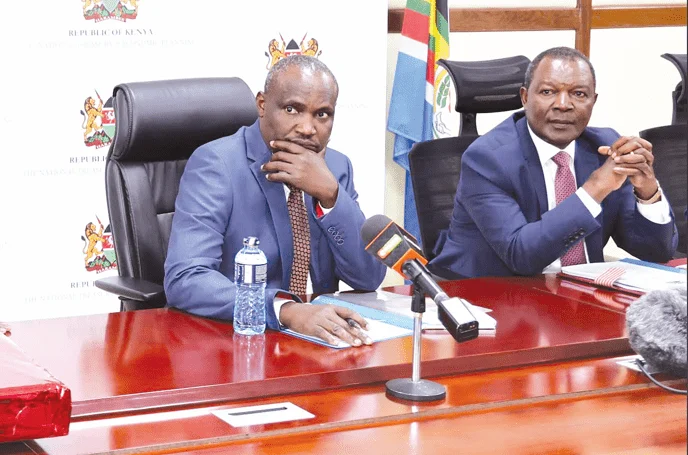
- Institutional coordination: senior officials — including the Director of Public Prosecutions, the Director General of the Financial Reporting Centre, the Director of Criminal Investigations, and the Ethics and Anti-Corruption Commission CEO — have held repeated high-level meetings throughout 2026 to coordinate reforms and prepare for FATF evaluation.
- Preparation for FATF Africa Joint Group evaluation. Kenya’s agencies have been preparing for a face-to-face engagement with this FATF body, which will assess the country’s progress before making recommendations on its status.
The Funding Problem Threatening Kenya’s Exit Timeline
A significant obstacle has emerged in Kenya’s push to exit the FATF grey list: funding for the Financial Reporting Centre (FRC), the country’s financial intelligence unit. The FRC requested Sh2.49 billion for the 2026/27 fiscal year, but received an allocation ceiling of just Sh765.5 million.
After deducting personnel and fixed administrative costs, operational funds stood at effectively zero. Although the National Assembly’s finance committee recommended an additional Sh388 million, even with this increase, funding would remain below the FRC’s minimum operational threshold of Sh1.33 billion.
This matters because the FRC’s director-general has been explicit: Kenya cannot exit the grey list without a well-funded exit plan. The centre currently lacks the capacity to analyse the more than 10,000 Suspicious Transaction Reports and Suspicious Activity Reports it receives annually — a capacity gap that directly undermines the country’s ability to demonstrate the kind of effective, in-practice enforcement FATF requires for delisting.
What Other Countries’ Exits Tell Us
Kenya’s situation isn’t unique, and recent history offers some reassurance about the process. In October 2025, Burkina Faso, Mozambique, Nigeria, and South Africa were all removed from the FATF grey list after demonstrating sufficient progress on their action plans — South Africa’s exit was particularly notable, given it had only been listed since 2023, showing that a relatively rapid turnaround is achievable with sufficiently robust reforms.
What This Means If You’re a Kenyan Business or Individual Handling International Transfers
While Kenya remains on the grey list, a few practical realities are worth keeping in mind:
- Expect continued documentation requirements for significant international transfers — this isn’t likely to ease until delisting actually occurs.
- Use Tier 1 banks with established correspondent banking networks for major international payments. Banks like Equity, KCB, Absa Kenya, Standard Chartered Kenya, Diamond Trust Bank, Co-operative Bank, and NCBA maintain direct SWIFT connectivity and are best positioned to handle cross-border transfers smoothly despite Kenya’s FATF grey list conditions. Our guide to Kenya’s best banks covers how these institutions compare beyond just international transfer capability.
- Keep beneficial ownership and purpose-of-payment documentation readily available — this is consistently the type of information banks now require for cross-border transactions involving Kenya.
- Watch for delisting news, since it would likely reduce transfer friction and compliance costs relatively quickly — as seen with countries that exited in October 2025.
Frequently Asked Questions
Is Kenya still on the FATF grey list? Yes. As of the most recent FATF updates in 2026, Kenya remains on the grey list under Increased Monitoring, despite an initial target of exiting by May 2026.
When was Kenya placed on the FATF grey list? February 2024, after FATF identified deficiencies in Kenya’s anti-money laundering and counter-terrorism financing framework.
How does the FATF grey list affect international money transfers to and from Kenya? It results in enhanced due diligence requirements, more documentation for transactions, and in some cases correspondent banks becoming more hesitant to maintain relationships with Kenyan banks — a phenomenon known as de-risking.
Why hasn’t Kenya exited the FATF grey list yet? Despite legislative and institutional reforms, funding shortfalls at the Financial Reporting Centre have limited the country’s capacity to demonstrate effective, in-practice enforcement, which is required alongside legal reforms for delisting.
Which countries have recently exited the FATF grey list? Burkina Faso, Mozambique, Nigeria, and South Africa were all removed in October 2025 after demonstrating sufficient reform progress.
This article is for educational and informational purposes only. FATF’s assessment of Kenya’s status can change following each plenary review — confirm the current status via the FATF’s official website before making decisions that depend on it.