Binance P2P Scams in Kenya: How to Protect Your M-Pesa (2026)
Binance P2P scams in Kenya mostly target one moment: when you release crypto. Scammers want you to believe the M-Pesa money has arrived before it has.
Peer-to-peer trading is only as safe as your own habits. The platform holds the crypto in escrow, but you still control the release.
This guide covers the main scams and the simple rules that stop most of them.
Quick answer
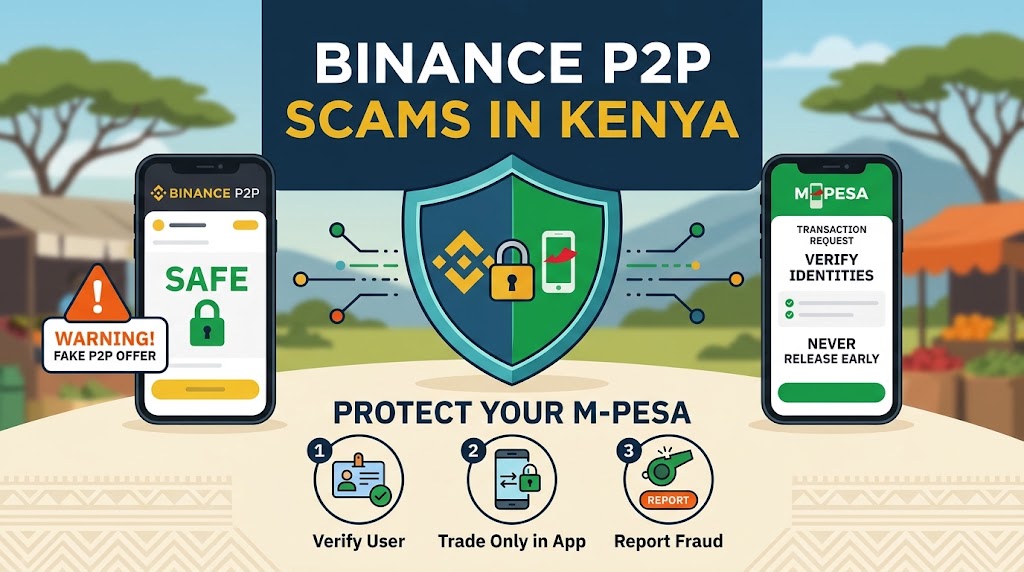
- Never release crypto until you see the money in your own M-Pesa.
- A screenshot or an SMS is not proof of payment.
- Keep the whole conversation inside the platform.
- Only trade with a payer whose M-Pesa name matches their verified name.
The Golden Rule
Your own M-Pesa confirmation must be on your own phone before you release crypto. If someone pressures you to skip this, they are the scam.
Verify inside your M-Pesa app or with a balance check. One guide says the only reliable proof is logging into the M-Pesa app or checking your balance with *334#.
6 Common Binance P2P Scams in Kenya
1. Fake payment screenshots or SMS
The scammer sends a fake screenshot of an M-Pesa payment and presses you to release coins before your own phone shows the money. Binance Academy warns against releasing crypto based only on a receipt, screenshot or SMS.
2. Reversal and chargeback threats
The buyer pays, you release, then they ask for the payment to be reversed. If Safaricom processes a reversal, you can lose both the cash and the cryptocurrency. Treat claims of “wrong number” payments with suspicion, and never refund outside the platform.
3. Triangular fraud
The scammer tells another victim to send an M-Pesa payment to your number, so the money you see comes from an innocent third party. That innocent person may later report it. One guide advises insisting that the M-Pesa sender’s name matches the buyer’s verified name on Binance.
4. Fake Binance support
A fraudster in the chat pretends to be Binance support, says you broke the rules and tells you to confirm receipt of funds to avoid account deactivation. Real support will never ask you to release crypto.
5. Account takeover
If your account is hacked, a scammer can change your payment details and sell your crypto through P2P, sending the money elsewhere. Turn on 2FA and review your payment methods regularly.
6. Off-platform deals and pressure
Avoid off-platform deals, as these are outside Binance’s protections. Be wary of any buyer who rushes you, moves the chat to WhatsApp or Telegram, or offers a rate that is too good.
8 Safety Rules for P2P Sellers
- Confirm the money in your own M-Pesa before releasing.
- Match the payer’s name to the verified buyer name.
- Keep all chat on the platform.
- Never share OTPs, PINs or recovery phrases.
- Ignore “support” messages in the trade chat.
- Don’t accept payment from third parties.
- Check your payment methods and 2FA regularly.
- Walk away from pressure or rates that are too good.
A Note on Account Freezes
Regulators are watching the sector. Kenya ordered Binance to freeze an undisclosed number of user accounts for investigation in a money laundering crackdown. That makes dealing with unknown counterparties riskier. Keep records of every trade.
What to Do If You Are Scammed
- Open a dispute inside the platform while the trade is still open.
- Call Safaricom’s fraud line immediately. A reversal attempt only works in the first minutes.
- File a report with the DCI Cybercrime Unit.
- Forward suspect messages to 333.
Recovery is rare, but reporting quickly helps.
Is It Legal?
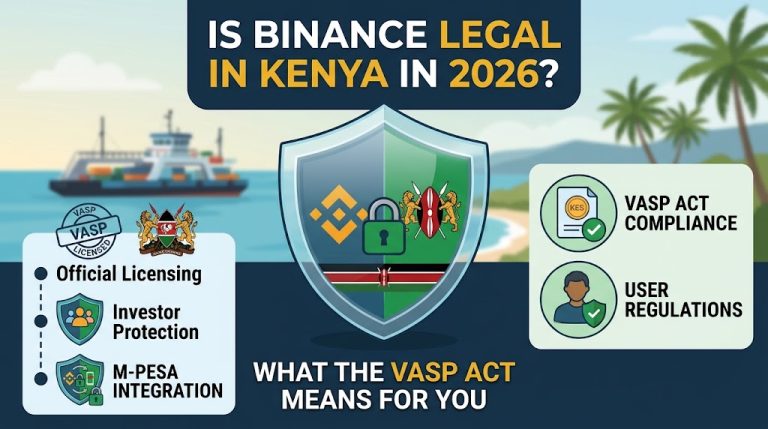
Crypto in Kenya is now regulated under the VASP Act. Read our guide: Is Binance legal in Kenya in 2026?
Frequently Asked Questions
Is Binance P2P safe in Kenya?
The escrow system helps, but sellers still need to confirm payment themselves. Binance P2P is only as safe as your own discipline about releasing coins.
Can I trust a payment screenshot?
No. Always confirm in your own M-Pesa.
What if the buyer’s name doesn’t match?
Cancel the trade.
Can an M-Pesa payment be reversed after I release?
It can be disputed. You could lose both the money and the crypto.
Should I chat on WhatsApp?
No. Keep the conversation on the platform.
This article is for information only and is not financial or legal advice. Crypto trading carries risk, including total loss.