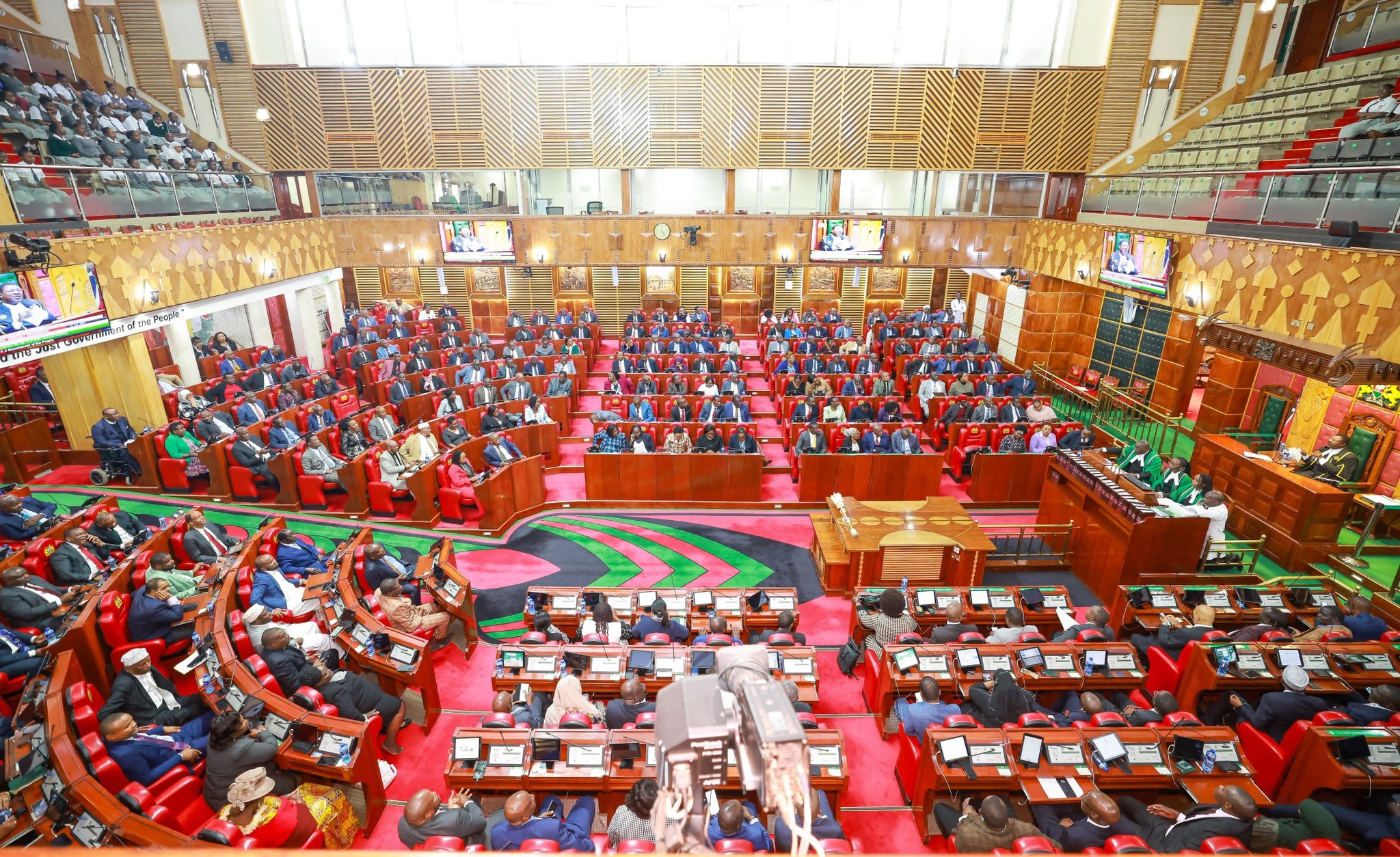
Kenya Budget 2026/27 Explained — Winners, Losers and What Changes for Ordinary Kenyans

10 June 2026

The Kenya Budget 2026/27 totals KSh 4.78 trillion — and most of it will not reach your pocket. This is the government’s spending plan for the financial year starting July 1, 2026, and it is being read in Parliament today by Treasury CS John Mbadi. Underneath the headline figure are real decisions about who gets more, who pays more, and what life looks like for ordinary Kenyans from next month.

This guide cuts through the political language and gives you the honest breakdown — in plain Kenyan English.


Table of Contents

  1. Kenya Budget 2026/27 — What It Is and How It Differs from the Finance Bill
  2. Where the KSh 4.78 Trillion Goes — The Full Breakdown
  3. Kenya Budget 2026/27 Winners — Who Gets More
  4. Kenya Budget 2026/27 Losers — Who Pays More or Gets Less
  5. What Changes for Ordinary Kenyans from July 1
  6. Is the Kenya Budget 2026/27 Realistic? The Honest Assessment
  7. Frequently Asked Questions

Kenya Budget 2026/27 — What It Is and How It Differs from the Finance Bill

The Kenya Budget 2026/27 is the government’s annual spending plan — the document that sets out how much money each ministry, county, and programme receives for the financial year running from July 1, 2026 to June 30, 2027. It is presented to Parliament by the National Treasury Cabinet Secretary during the Budget Reading, which is happening today.

It is not the same as the Finance Bill. This is a distinction most Kenyans miss — and it matters.

The Budget decides where the money goes — education, health, roads, salaries, debt repayment. The Finance Billdecides how the money is raised — which taxes apply, at what rates, and to whom.

Both are in play simultaneously right now. The Kenya Finance Bill 2026 — which covers phone tax changes, M-Pesa fee proposals, and the tax amnesty — is a separate document being debated alongside the budget. Understanding which document does what helps you track what actually affects you.

The headline Kenya Budget 2026/27 numbers:

Item Amount
Total expenditure KSh 4.78 trillion
As a share of GDP 23%
Revenue target (taxes + non-tax) KSh 3.53 trillion
Funding gap (deficit) KSh 1.25 trillion
Domestic borrowing (to fill the gap) KSh 1.1 trillion (record)
Development expenditure KSh 749.5 billion
County government transfers KSh 495.7 billion
GDP growth projected 5.3%
Budget theme “Accelerating Gains under the Bottom-Up Economic Transformation Agenda for Inclusive and Sustainable Growth”

The KSh 4.78 trillion figure represents a KSh 490 billion increase from FY2025/26 — a 11.4% jump year-on-year. The government is spending more while simultaneously facing a revenue shortfall: KRA collected KSh 115.3 billion below target by December 2025. That gap between ambition and revenue reality is the central tension in this budget, and it shapes almost every other number in it.

Why this budget matters more than usual: With the 2027 general election 16 months away, every allocation in this document is also a political signal. An analysis of the proposed KSh 4.78 trillion budget shows that the government is prioritising recurrent votes — expenditures that finance daily operations and salaries — to deliver an immediate and visible impact. Spending that voters can see before election day tends to get funded. Spending that takes years to show results tends to get cut.


Where the KSh 4.78 Trillion Goes — The Full Breakdown

Before identifying winners and losers, it helps to understand how the Kenya Budget 2026/27 is structured. The KSh 4.78 trillion is divided into four broad buckets:

The allocations include KSh 3.46 trillion for recurrent spending, KSh 749.5 billion for development projects, KSh 495.7 billion for transfers to county governments, and KSh 2 billion for the Contingency Fund.

Recurrent expenditure — KSh 3.46 trillion (72% of the total) This covers the cost of running the government on a daily basis: civil servant salaries, government office operations, pensions, interest payments on existing debt, and transfers to state corporations. Over 70 cents of every shilling in this budget goes here before a single road is built or hospital stocked. The size of this recurrent bill is the structural challenge Kenya’s budget has faced for a decade, and it has not improved.

Development expenditure — KSh 749.5 billion (16% of the total) This is the capital spending envelope — roads, water infrastructure, energy projects, hospitals, schools, and irrigation schemes. A higher development share signals more investment in the country’s future; a lower share signals the budget is being consumed by the present. At 16%, this is the portion most ordinary Kenyans will eventually feel through improved infrastructure, when it is implemented.

County government transfers — KSh 495.7 billion (10% of the total) County governments emerge as major winners, receiving a total allocation of KSh 495.7 billion, up from KSh 474.9 billion last year, ensuring devolved units get more resources to deliver services closer to citizens. Of this, KSh 420 billion is the equitable share — the constitutional minimum that counties receive regardless of performance. The remaining KSh 75.7 billion covers conditional grants and equalisation funds.

Sectoral priorities — where the big money is going: Education remains the top-funded sector with an allocation of KSh 658.5 billion — 15.7% of the total budget. Other major allocations include national security at KSh 373.8 billion, health at KSh 235.2 billion, and agriculture at KSh 196.4 billion.


Kenya Budget 2026/27 Winners — Who Gets More

County Residents Across All 47 Counties

The single largest structural winner in the Kenya Budget 2026/27 is devolution. County governments receive KSh 495.7 billion — a KSh 20.8 billion increase from last year and the highest county allocation in Kenya’s devolution history. If your county government spends this well, you will see it in better roads, more functional health centres, improved water access, and faster local services. The word “if” is doing significant work in that sentence — county absorption and spending quality vary enormously — but the allocation itself is real.

Teachers and the Education Sector

The Teachers Service Commission’s allocation will rise by KSh 11 billion to KSh 420.91 billion. This is the single largest sectoral increase in cash terms and reflects both the size of Kenya’s teaching workforce and the political value of TSC teachers ahead of 2027. Teachers who have been waiting for salary implementation or promotions under the current Collective Bargaining Agreement will find this allocation important. Education overall receives KSh 658.5 billion — 15.7% of the entire budget — maintaining its position as Kenya’s top-funded sector.

Water, Sanitation, and Energy Users

The water and sanitation sector received the largest proportional increase in the budget, gaining an additional KSh 4.89 billion. Energy and irrigation also feature among the sectors with increased allocations, with spending directed at power line rehabilitation, rural electrification, and food security programmes. If you live in an area currently underserved by piped water or reliable electricity, these allocations — if fully disbursed and well-managed — represent improved services over the 2026/27 financial year.

Healthcare Patients Under the SHIF System

Health receives KSh 235.2 billion, with a portion directed at strengthening the Social Health Authority (SHA) and the SHIF means-testing subsidy programme. The government is funding a component that allows the poorest Kenyans — those who cannot afford the 2.75% SHIF contribution — to access health services through a subsidised pathway. This matters most to informal workers and rural households. For the SHIF contribution rates Kenya 2026 — and how this deduction affects your payslip — see our dedicated guide.

Farmers and the Agribusiness Sector

Agriculture receives KSh 196.4 billion, with the budget continuing to prioritise climate-smart agricultural investments, subsidised fertiliser distribution, and irrigation expansion under the BETA economic agenda. Smallholder farmers who benefited from the subsidised input programmes in 2025/26 can expect these to continue.

Prime Cabinet Secretary Mudavadi’s Office

The Office of the Prime Cabinet Secretary Musalia Mudavadi will receive KSh 3.9 billion, up from KSh 2.89 billion. A 35% budget increase in a year of fiscal austerity is notable — it reflects the expanded portfolio and political weight of the position in the current administration.


Kenya Budget 2026/27 Losers — Who Pays More or Gets Less

Borrowers — Everyone Who Needs a Bank Loan

This is the most consequential loss for ordinary Kenyans, and the one least discussed in budget coverage. The Kenya Budget 2026/27 plans to borrow a record KSh 1.1 trillion from the domestic market to fill the KSh 1.25 trillion funding gap. When the government competes in the domestic bond and bill market at this scale, it pushes up interest rates for everyone else.

Banks prefer lending to the government — it is risk-free — over lending to businesses and individuals, which carry default risk. When domestic borrowing is this large, private credit gets crowded out. Loan interest rates stay elevated, home loans become more expensive, and businesses find it harder to access affordable working capital. If you are planning to take a bank loan in the 2026/27 financial year, budget for a higher interest rate environment than you might hope for.

Taxpayers Servicing Kenya’s Debt Mountain

Kenya’s economy remains resilient with GDP growth projected at 5.3% in 2026, supported by declining inflation of 4.5% in December 2025, a stable exchange rate of KSh 129 to the dollar, and upgraded sovereign credit ratings. But even in this relatively positive macroeconomic environment, debt servicing consumes a disproportionate share of revenue. Of every KSh 100 Kenya collects in revenue, more than KSh 50 goes to repaying existing debt — principal and interest. That is money unavailable for new roads, hospitals, or salary increases, regardless of what any budget speech says.

The Informal Economy — 5 Out of 6 Kenyan Workers

Kenya’s own Economic Survey 2026 confirms that five out of every six working Kenyans are in the informal economy. The Kenya Budget 2026/27 offers limited direct relief for this group — no significant expansion of cash transfer programmes, no new income support scheme, and no explicit informal worker subsidy. The budget’s benefits flow primarily through formal channels: TSC salaries, civil servant pay, county government services, and infrastructure projects. Informal traders, casual labourers, and subsistence farmers see the least direct benefit from a budget of this size.

The Roads Sector — A Significant Cut

Major reductions have been made to allocations for the National Treasury, roads, tourism, regional development and culture. For a country where poor roads remain one of the most visible barriers to economic activity in rural areas, a cut to the roads budget will be felt — particularly in counties dependent on agricultural access roads that are not part of major national highway projects.

The Presidential Office — A Small But Symbolic Reduction

The Executive Office of the President’s net recurrent expenditure would drop to KSh 8.8 billion from KSh 8.85 billion, seemingly in reaction to public uproar about extravagant spending since Ruto took over power. State House’s allocation in the upcoming financial year is KSh 12.6 billion, down from KSh 16.3 billion in FY2025/26. The State House reduction — from KSh 16.3 billion to KSh 12.6 billion — is the more significant figure: a KSh 3.7 billion cut that reflects both fiscal pressure and political sensitivity ahead of 2027.


What Changes for Ordinary Kenyans from July 1

The Kenya Budget 2026/27 does not exist in isolation. It sits alongside the Finance Bill 2026 — whose provisions also take effect July 1, 2026. Together, they determine what your financial life looks like from next month. Here is the plain summary:

Your phone may get cheaper. The Finance Bill 2026 proposes replacing the current 55.5% combined import tax on mobile phones with a single 25% excise duty at activation. A smartphone retailing at KSh 31,100 today could drop to approximately KSh 25,000. See the full Kenya Finance Bill 2026 guide for the details.

M-Pesa transaction fees may increase slightly. The Finance Bill proposes 16% VAT on payment provider fees — not on the money you send, but on the fee charged for sending it. This is still being contested. See our Finance Bill 2026 guidefor the confirmed position.

Your SHIF and NSSF deductions continue. The 2.75% SHIF contribution and the NSSF Phase 4 rates (6% of pensionable earnings, effective February 2026) remain in place. If you want to understand exactly what leaves your payslip each month, use our Kenya PAYE Calculator 2026 for the full gross-to-net breakdown.

County services may improve. With KSh 495.7 billion going to counties — the highest allocation in history — your local government has more resources than ever to deliver health, water, and road services. Whether those resources are spent well depends on your specific county.

Consumer credit will remain expensive. The government’s KSh 1.1 trillion domestic borrowing target will keep bank lending rates elevated through 2026/27. If you need a loan, start your planning now and compare rates carefully. Our guide on how to budget in Kenya 2026 covers how to manage household finances in a high-interest environment.

KRA filing deadline unchanged — June 30, 2026. If you have not yet filed your income tax returns for 2025, the deadline is June 30. Missing it triggers an automatic penalty from July 1. See our KRA Returns Deadline June 30 guidefor the step-by-step filing process and how to avoid the most common mistakes.


Is the Kenya Budget 2026/27 Realistic? The Honest Assessment

Budgets are targets, not guarantees. Here is the honest analysis of where the Kenya Budget 2026/27 stands on the realistic-to-wishful spectrum.

The Revenue Target Is Ambitious

The budget projects KSh 3.53 trillion in revenue. Implementation of the current budget has been affected by shortfalls in ordinary revenue amounting to KSh 115.3 billion by December 2025. That shortfall — KSh 115.3 billion below target in just six months — is a significant warning sign. KRA has been below target, and the revenue goal for 2026/27 is higher still. If collections fall short again, the government will need to borrow more, cut spending, or both.

The government’s response has been to implement zero-based budgeting — requiring every ministry to justify every expenditure from scratch rather than assuming last year’s allocation as a baseline. This is the right approach to fiscal discipline. Whether it translates into actual savings remains to be seen.

The Borrowing Risk Is Real

A record KSh 1.1 trillion in domestic borrowing is not just a budget number — it is a structural risk. Kenya’s debt-to-GDP ratio, while currently within East African Community limits, has been growing. Every year of heavy domestic borrowing adds to interest obligations that crowd out future development spending. Treasury projections show the country will collect KSh 3.53 trillion in revenues against the KSh 4.7 trillion expenditure, creating a funding gap that will require careful balancing between domestic and external borrowing sources.

The key risk: if revenue underperforms — as it did in H1 2025/26 — the government either borrows even more domestically or implements supplementary budget cuts mid-year. Both outcomes are more disruptive than a well-executed original budget.

The GDP Growth Target Is Plausible

Kenya’s economic outlook remains promising with GDP growth projected at 5.3% in 2026, driven by favourable weather, improved agricultural productivity, and climate-smart investments. Kenya has outperformed regional GDP growth averages for three consecutive years. The 5.3% projection is ambitious but not unrealistic — it assumes continued agricultural sector recovery, stable global commodity prices, and no major domestic shocks. Kenya’s upgraded sovereign credit ratings from Moody’s and S&P Global support this outlook.

The Election Optics Problem

With 16 months to the 2027 general election, it is difficult to separate fiscal policy from political positioning in this budget. TSC’s KSh 11 billion increase, the record county allocation, and the maintenance of civil servant salary baselines all read as pre-election investments in politically significant voter blocs. These are not necessarily bad decisions — teachers and county services matter — but they are also expensive commitments that raise the recurrent spending floor going into 2027/28, regardless of whether revenue targets are met.

The honest verdict: the Kenya Budget 2026/27 is an ambitious plan backed by plausible but not certain revenue assumptions, funded partly by record borrowing, and shaped significantly by the electoral calendar. For ordinary Kenyans, the most direct impacts in 2026/27 will be felt through county service delivery, the continuing high cost of borrowing, and the Finance Bill tax changes that accompany it — particularly on phones and digital payments.


Frequently Asked Questions

What is the total Kenya Budget for 2026/27? The Kenya Budget 2026/27 totals KSh 4.78 trillion in total expenditure — up from KSh 4.29 trillion in FY2025/26. It was presented to Parliament during the Budget Reading on June 10, 2026. The budget covers the financial year from July 1, 2026 to June 30, 2027.

What is the Kenya Budget 2026/27 deficit? The Kenya Budget 2026/27 has a funding gap of approximately KSh 1.25 trillion — the difference between planned expenditure of KSh 4.78 trillion and projected revenue of KSh 3.53 trillion. This gap will be financed primarily through domestic borrowing, with the government targeting a record KSh 1.1 trillion from the local market.

Who are the biggest winners in the Kenya Budget 2026/27? The biggest winners in the Kenya Budget 2026/27 are county governments (KSh 495.7 billion — a record allocation), the education sector (KSh 658.5 billion including a KSh 11 billion increase for the TSC), the water and sanitation sector (receiving the largest proportional increase), and the energy sector. Healthcare also benefits through expanded SHA/SHIF funding.

What does the Kenya Budget 2026/27 mean for ordinary Kenyans? For ordinary Kenyans, the Kenya Budget 2026/27 means: potentially cheaper smartphones (if the Finance Bill phone tax change passes), continued SHIF and NSSF deductions, improved county services in well-managed counties, an elevated interest rate environment due to record government borrowing, and no significant changes to PAYE or income tax rates. The KRA filing deadline of June 30, 2026 is unchanged.

How does the Kenya Budget 2026/27 differ from the Finance Bill 2026? The Kenya Budget 2026/27 is a spending plan — it allocates money to ministries, counties, and programmes. The Finance Bill 2026 is a tax law — it determines how revenue is raised through changes to income tax, VAT, and excise duty. Both take effect from July 1, 2026 but are separate documents that must both be approved by Parliament.

Is the Kenya Budget 2026/27 realistic? The revenue target of KSh 3.53 trillion is ambitious given that KRA was KSh 115.3 billion below target by December 2025. The GDP growth projection of 5.3% is plausible given Kenya’s recent track record. The greatest risk is that revenue underperforms, forcing either additional borrowing beyond the planned KSh 1.1 trillion or mid-year spending cuts. The budget’s strong pre-election spending commitments add a structural rigidity that makes mid-year cuts politically difficult.


The Bottom Line

The Kenya Budget 2026/27 is the largest spending plan in Kenya’s history. It is also, in many ways, a budget of contradictions: record borrowing alongside fiscal discipline rhetoric; pre-election generosity alongside zero-based budgeting; ambitious revenue targets alongside a recent revenue shortfall.

For ordinary Kenyans, the practical impact from July 1 depends less on the budget’s headline figure and more on three things: how well your county government spends its KSh 495.7 billion allocation, whether the Finance Bill’s phone and M-Pesa proposals are passed as-is or amended, and whether you have filed your KRA returns before the June 30 deadline.

The last one is entirely within your control. The other two are not.

For the full picture of what else changes from July 1 — including the phone tax restructure, M-Pesa fee proposals, and tax amnesty — read the Kenya Finance Bill 2026 complete guide. And if you want to understand how your SHIF, NSSF, Housing Levy, and PAYE interact under the 2026 rules, the Kenya PAYE Calculator 2026 gives you the gross-to-net answer at your specific salary level.


Budget figures sourced from the National Treasury 2026 Budget Policy Statement (February 2026), Kenya National Assembly official budget documentation (June 2026), Tuko.co.ke budget analysis (May 2026), Kenyans.co.ke cabinet budget coverage (February 2026), Pulse Kenya sector allocations analysis (June 2026), and Eastleigh Voice Cabinet approval coverage (February 2026). Sectoral allocation figures reflect draft estimates and may be updated during parliamentary debate. This article is for informational and educational purposes only. Last updated: June 10, 2026.

See Your Business Here?

Want Your Business Listed on Local Listing Dealz? Contact Us Today For Further Information on Listing and Advertising.