
Kenya Election 2027 and Your Money: What Smart Investors Are Doing Now
Kenya’s next general election is scheduled for August 2027 — roughly 12 months away as of this update. The Kenyans who prepared 12–18 months early came out ahead in every recent election cycle. The ones who reacted only when campaign rallies started drowning out everything else — panicking, selling, pulling money out at the worst moment — paid for that panic with real losses.
If you have money in NSE stocks, a property investment, savings, or a business, the time to think about your election strategy is now, not when the countdown gets loud. Here’s exactly what history shows happens to Kenyan investments around elections, and the specific moves worth making today.
Quick facts: Kenya holds general elections every 5 years under the 2010 Constitution. The last election was August 9, 2022. The next is scheduled for Tuesday, August 8, 2027. Voter registration typically opens through the IEBC well ahead of the vote — check iebc.or.ke for current registration windows as the date approaches.
What History Shows: Elections and Kenyan Markets
Kenya has held general elections in 2007, 2013, 2017, and 2022. Each cycle has left a clear pattern on financial markets — one that savvy investors have profited from and unprepared ones have suffered through.
The NSE Pattern
The NSE consistently shows a predictable three-phase pattern around election years:
Phase 1 — The pre-election slowdown (6–12 months before the vote): Investor sentiment weakens as political uncertainty rises. Foreign investors especially become cautious and begin reducing Kenya exposure. Trading volumes drop. New listings and rights issues are delayed. The NSE20 index typically underperforms in this window.
Phase 2 — Election volatility (1–3 months around the vote): Markets become jittery. If the election is peaceful and results are accepted, markets often rally within days of the announcement. If results are disputed — as in 2007 and 2017 — markets decline sharply and foreign investor exits accelerate.
Phase 3 — The post-election recovery: Historically, the 12 months following a peaceful election deliver some of the NSE’s strongest performance. Pent-up investment decisions get made, government spending on development accelerates, and foreign investor confidence returns.
Elections generally pose the risk of destabilising an economy when the resultant period is chaotic and unstable politically, leading to decreased business activity and negative capital flows. Investor sentiment worsens as risk-averse investors sell holdings while moderate-risk investors hold off on new investments.
In 2022, markets were subdued in the months preceding the election, then rallied strongly after William Ruto’s victory was confirmed peacefully by the Supreme Court. The NSE was among the best-performing African exchanges in dollar terms for 2024 — largely a post-election recovery story.
The 2007 election remains the cautionary tale. Post-election violence triggered a severe market decline and GDP growth fell to its lowest level in years. The lesson: peaceful transitions are enormously valuable to market returns.
The Kenyan Shilling Pattern
The shilling weakens in the lead-up to elections as foreign investors reduce exposure and dollar demand increases from businesses hedging against uncertainty. This pattern appeared in 2017 and 2022 — both saw the shilling soften in the months before the vote before stabilising post-election.
In 2022, the shilling faced additional pressure from global factors (dollar strength, oil prices) compounding election uncertainty. By contrast, the shilling has strengthened significantly through 2024–2026 from its historic lows — giving it more headroom before the 2027 cycle.
A weakening shilling raises import costs, squeezes businesses with dollar-denominated costs, and can push inflation higher. Investors with Kenya shilling savings are exposed to this risk.
The Property Market Pattern
Real estate transactions slow dramatically in election years as buyers and sellers adopt a wait-and-see approach. Commercial property is most affected — lease renewals get delayed, expansion plans are paused, and new developments stall.
Residential property in Nairobi’s established markets (Karen, Kilimani, Westlands, Lavington) tends to be more resilient than commercial or satellite town developments. Land transactions in politically contested areas can freeze almost entirely.
The post-election recovery in property mirrors equities: the 12–18 months after a peaceful election typically see transaction volumes surge as deferred decisions get made simultaneously.
What the 2027 Election Looks Like Today
It’s too early to predict the political outcome with confidence, but several structural factors make 2027 different from previous cycles:
Incumbency dynamics. Incumbent presidents historically win re-election in Kenya. However, anti-government protests in 2024 and ongoing economic discontent create genuine uncertainty heading into 2027.
A more financially integrated population. More Kenyans now hold NSE stocks directly (via Ziidi Trader and DhowCSD), money market funds, and government bonds than in any previous election cycle. Market movements will be felt more broadly than in 2017 or 2022.
The crypto wildcard. Kenya’s six million-plus crypto users represent a new variable. Crypto can serve as a capital flight vehicle during political uncertainty in a way that wasn’t possible in 2017 or 2022. This could amplify shilling weakness if political uncertainty spikes.
A stronger macroeconomic base. Inflation has been contained, the shilling is more stable than it was in 2022–2023, and the CBK has room to cut rates further if economic conditions deteriorate. This gives policymakers more tools to cushion election-related shocks than they had five years ago.
The Smart Investor Playbook for 2026–2027
Here is the actionable strategy, broken into three time windows.
Now Through Late 2026: Build Your Position
This is the best window to act. Markets are not yet pricing in election risk and the economic environment is constructive.
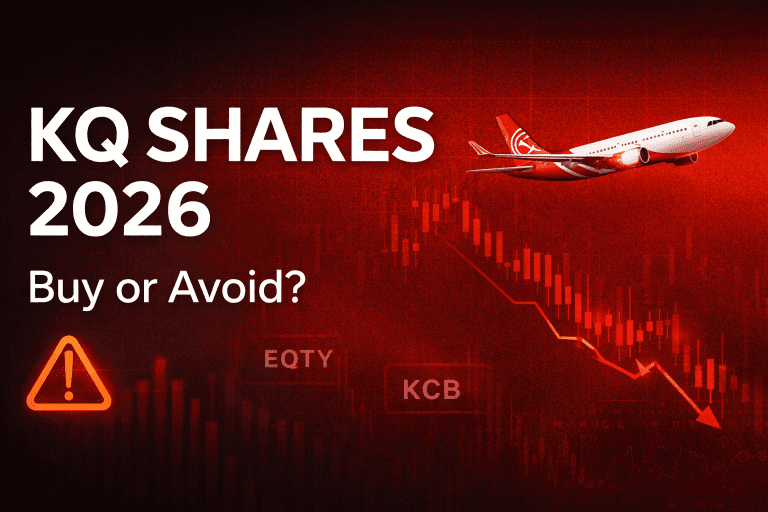
On the NSE: Consider building or adding to positions in fundamentally strong Kenyan companies with dividend histories — particularly banks (KCB, Equity, Co-op), Safaricom, and consumer staples. These are the stocks that recover fastest post-election and pay dividends while you wait. Quality stocks bought now at reasonable prices before election uncertainty discounts them could deliver strong returns through 2028.
On government securities: Infrastructure bonds and Treasury bonds locked in now will be unaffected by election volatility. This is their biggest advantage over equities — a 5-year infrastructure bond pays its coupon regardless of what happens politically. If you have long-term savings, locking into fixed-income instruments now insulates that portion of your wealth completely.
On property: If you’re considering buying property and qualify financially, late 2026 is likely a better time than mid-2027. Transaction costs and negotiation power both favour buyers in a pre-election market where sellers are anxious to close deals before campaign season intensifies. Avoid speculative land purchases in politically contested regions.
On savings: Maximise your emergency fund now. Keep 6 months of expenses in a money market fund — liquid, stable, and insulated from market volatility. This is not just financial advice; it’s election-year insurance.
Early-to-Mid 2027: The Caution Window
As the election approaches and campaign intensity builds, reduce new risk exposure rather than adding to it.
On the NSE: Don’t panic-sell existing quality positions — history shows long-term holders who stay through the election come out ahead. But hold off on adding major new positions until after results are known and accepted.
On the shilling: If you have significant savings in Kenya shillings and dollar expenses or international commitments, consider hedging a portion by moving some savings into a dollar-denominated money market fund. Several Kenyan fund managers offer USD MMFs — not the best return, but a hedge against potential shilling weakness.
On property: Pause major property transactions in the months immediately before the election. This isn’t pessimism — sellers become unwilling to negotiate and buyers grow cautious. Wait for post-election clarity.
On business: Stock up on critical inventory and inputs before the election if supply chain disruptions are a risk for your business. Political uncertainty historically causes short-term supply chain friction even in peaceful elections.
August 2027 Onwards: The Opportunity Window
If the election result is accepted peacefully — as in 2013 and 2022 — move decisively.
The post-election period is historically the best time to buy NSE stocks, sign long-term leases, finalize property purchases, and make capital investments in your business. Everyone who deferred decisions in the months before will be making them simultaneously, creating momentum in markets and the real economy.
Investors who position themselves in quality assets through 2026, hold steady through the uncertainty of early-to-mid 2027, and then capitalise on the post-election recovery window have historically outperformed those who tried to time the market precisely.
The Three Assets to Avoid Going Into an Election Year
Speculative land in satellite towns: The property markets most exposed to election volatility are new satellite town developments, especially those near politically contested regions. Liquidity dries up and forced sellers can face very poor prices.
High-leverage positions: Anything requiring margin calls or loan repayments funded by volatile assets is dangerous in an election year. Reduce leverage before the uncertainty window.
Small-cap NSE stocks with thin trading volumes: These are the first to see sell-offs from nervous investors and the last to recover. Stick to the most liquid NSE companies if you’re buying equities ahead of an election.
Frequently Asked Questions
When is the next Kenya election? Kenya’s next general election is scheduled for Tuesday, August 8, 2027, under the standard five-year electoral cycle set by the 2010 Constitution. The last election was held August 9, 2022.
How often are general elections held in Kenya? Every five years, as set out in Kenya’s 2010 Constitution.
How do I register to vote in the 2027 election? Voter registration is managed by the IEBC (Independent Electoral and Boundaries Commission). Check iebc.or.ke directly for current registration windows and requirements as the 2027 date approaches — registration periods are announced ahead of the vote and typically require a national ID and biometric registration at a designated centre.
Should I sell my NSE stocks before the 2027 election? Historically, investors who held quality, liquid positions through past election cycles rather than panic-selling came out ahead, particularly after peaceful transitions in 2013 and 2022. This isn’t a guarantee for 2027, but the historical pattern favours patience over panic for fundamentally strong holdings.
Will the Kenyan shilling weaken before the 2027 election? The shilling has historically softened in the months before past elections as foreign investors reduce exposure, though it has strengthened significantly through 2024–2026, giving it more headroom heading into this cycle than it had in 2022.
The One Thing Most Guides Won’t Tell You
Elections in Kenya are not just a risk — they’re an opportunity. The investors who consistently outperformed across Kenya’s election cycles weren’t the ones who avoided the market. They were the ones who understood the pattern, built positions before the discount, held through the noise, and harvested the recovery.
The 2027 election will bring uncertainty. It will also bring opportunity for anyone who has read this guide, understood the historical pattern, and made their moves while everyone else was still watching the political news.
Start now. The clock is already running.
This article is for educational purposes only and does not constitute financial advice. Past election cycles are not a guarantee of how markets will behave in 2027. Consult a licensed financial advisor for decisions specific to your situation.