Referral Code Scams in Kenya: How They Work and How to Stay Safe (2026)
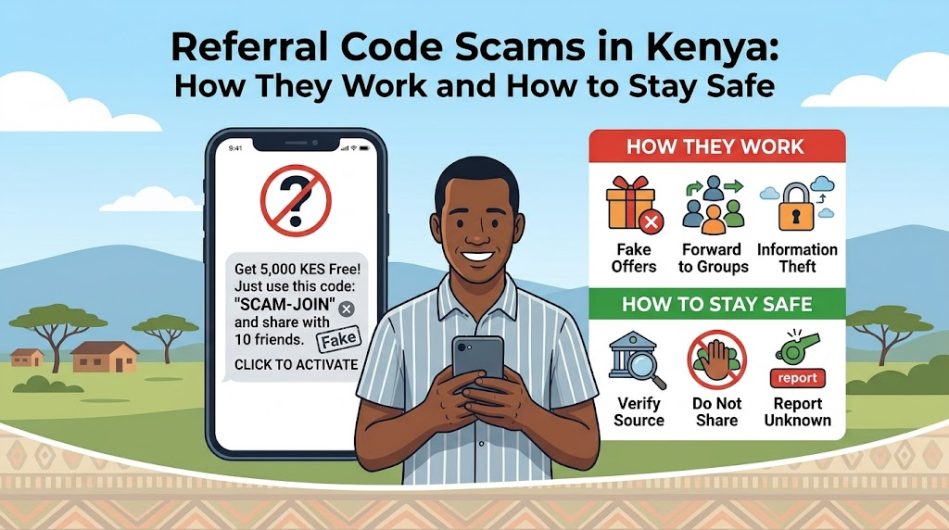
Referral code scams in Kenya use a normal-looking idea against you. A “friend” or an ad offers a bonus if you sign up with a code. Then you are asked to pay, recruit others or hand over your details.
Real referral programmes exist, and they are boring. The terms are written down and nothing is hidden.
This guide shows how real programmes work, the four scam patterns to watch for, and what to do if you have been caught.
Quick answer
- Real referral bonuses come with published conditions inside the app.
- A real bonus never needs you to pay a fee to unlock it.
- If earnings depend on recruiting more people, it is a pyramid scheme.
- Never share your M-Pesa PIN, OTP or ID photos for a bonus.
How Real Referral Programmes Work
A legitimate referral programme spells out what has to happen before anyone is paid. These examples show the pattern (not endorsements):
- Eversend’s programme pays both people a bonus once the friend registers with your code and meets the conditions, including a required top-up.
- Taptap Send’s referral terms say the reward is account credit that cannot be withdrawn as cash, and the company can void bonuses for suspected abuse.
Notice what is there: conditions, limits and the right to cancel. Scams sell certainty. Real programmes publish rules.
4 Referral Code Scam Patterns in Kenya
1. Pay-to-unlock rewards
The scammer says you have won, then asks for a small fee to release the reward. Africa Check messaged a number from a fake Facebook promotion and was told to deposit a KSh499 “unlocking fee” to receive a KSh35,000 reward. Another account asked for KSh486 to “unlock” a reward.
2. Pyramid referral schemes
These promise big earnings, but real money only comes from recruiting others. Such schemes are promoted on WhatsApp and Telegram, and are described as unsustainable and prone to collapse, leaving late joiners with heavy losses. They often use fake payment screenshots. Recruits are sent fake mobile money messages to show others that large payouts are real.
3. Engagement bait
The page says you qualify, then asks you to share it widely before you can claim. A fake “GoK Funds” page offered KES 4,100 if you shared it with 5 groups or 15 friends on WhatsApp. The sharing is the real goal, because it spreads the scam.
4. Fake apps and bots
Scammers use Telegram bots that imitate digital wallet brands to promote fake earning schemes and questionable apps, often installed from APK files. The app may steal logins or push you into more fees.
Real vs Fake: Quick Check
| Real referral programme | Referral scam |
|---|---|
| Terms inside the official app | Terms missing or changing |
| Bonus after conditions you can read | Fee to “unlock” or “activate” |
| Code comes from the app’s own site or store page | Code pushed by a stranger or a “support agent” |
| Earnings need no recruiting | Pay depends on bringing in others |
| Official app store download | APK file or Telegram link |
How to Check a Referral Offer Before You Join
- Find the offer inside the official app or on the company’s own website.
- Read the conditions. Look for deposits, lock-ups, spending and time limits.
- Check the provider is licensed for what it does. See our guide to verifying a fintech app.
- Search the offer name plus “scam”.
- Never pay to receive a bonus. If the offer needs a fee, walk away.
If You Share Referral Codes YourselBe honest with your audience. Say clearly that you may earn a bonus, and don’t promise income. Never ask people to pay you to join, and don’t copy “earnings” screenshots.
Our own bonus guide explains what real offers need: 100 free money to M-Pesa.
If You Have Already Paid or Shared Details
- Stop paying “release” fees.
- Forward suspicious messages to 333, and contact Safaricom through its official channels if you shared your PIN.
- Report to the police or DCI and keep screenshots.
- Report the page or profile on the platform.
Read more in our guide to fake vernment grants.
Frequently Asked Questions
Are referral codes safe?
Referral codes from an app’s own website or store page can be safe. Codes pushed by strangers need caution.
Do real referral programmes charge a fee?
No. You may need to deposit your own money into a regulated app, but there should be no fee to receive the bonus.
Is a referral scheme with no product a pyramid scheme?
If your income depends on recruiting others, yes, treat it as one.
What should I do if someone asks me for a code and a fee?
Don’t pay. Report the number and block it.
Where can I report a scam?
Forward the message to 333, report the profile on the platform, and report to the police or the DCI.
Referral terms change often. Always read the current conditions inside the app. This article is for information only.